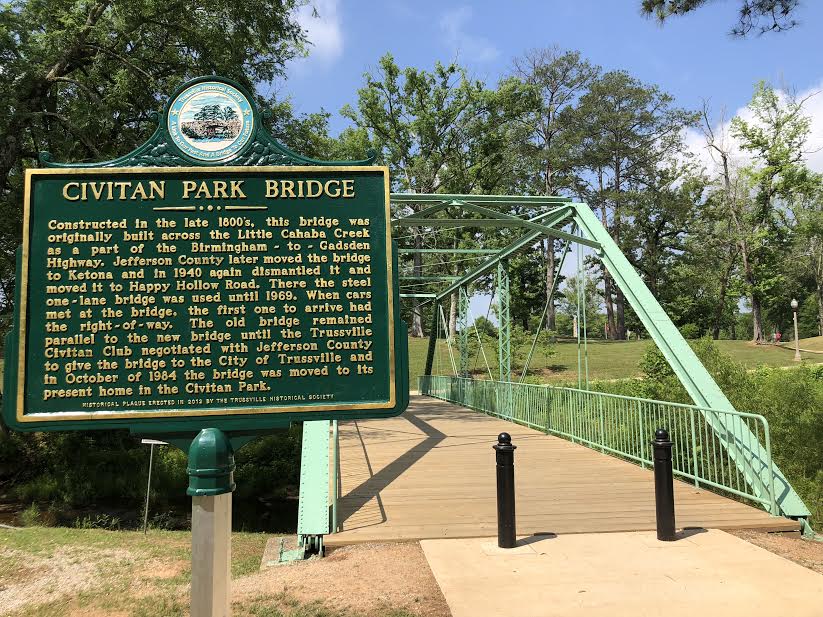
‘Well worth the wait,’ councilman says TRUSSVILLE – The official gemstone for a twentieth anniversary is the emerald, often a deep green color, and the city of Trussville has reached … Continue reading Trussville’s crown jewel shines again
BIRMINGHAM – The U.S. Attorney’s Office today launched the Birmingham Safe Neighborhoods Task Force to offer prevention and community outreach programs within the city.
This task force will complement the law enforcement work of the Birmingham Public Safety Task Force, which was announced last month, in combined efforts to reduce violent crime in the Birmingham area, announced U.S. Attorney Jay E. Town.
The Birmingham Safe Neighborhoods Task Force will engage law enforcement, government agencies, nonprofit organizations, and corporate citizens in a coordinated and collaborative process to ensure parity in prevention, enforcement, and re-entry efforts. Building and restoring relationships between communities and law enforcement is a primary function of the task force.
“This task force will endeavor to meaningfully engage citizens of Birmingham with regard to how we can improve the station of the entire city,” Town said. “It is no longer enough just to prosecute our worst offenders. Prevention and outreach programs that decrease criminal activity and increase opportunity must accompany our overall crime reduction initiative,” he said. “I appreciate the leadership of our mayor, our sheriff, and all of our task force members for their willingness to engage in this worthy challenge.”
Members of the Birmingham Safe Neighborhoods Task Force will collaborate to develop and conduct community programs aimed at education, community-police relations and building opportunities that will benefit the entire community.
“As stated before, we are here for as long as it takes,” said Jefferson County Sheriff Mike Hale. “I have no doubt this multifaceted initiative is going to have a very positive impact on crime in general, but most especially violent crime. Taking violent criminals out of these neighborhoods and locking them up for 15 or more years will return these neighborhoods back to the good folks and improve their quality of life dramatically. That is the goal. It will be met.”
Building and improving trust and communication between the community and members of law enforcement will be a critical function of the BSNTF, Town said. That will include encouraging patrol officers, deputies and agents to increase general and positive interactions in the community, whether that be helping to spruce up a community park or passing out free ice-cream coupons to neighborhood kids.
The two Birmingham task forces incorporate principles of Project Safe Neighborhoods, the Department of Justice’s violent crime reduction strategy, and the National Public Safety Partnership. PSN is a nationwide Justice Department program committed to reducing gun and gang crime by networking existing local programs that target gun crime and supporting those efforts with training and funding.
U.S. Attorney General Jeff Sessions announced PSP last year as a training and technical assistance program designed to enhance the capacity of local jurisdictions to address violent crime in their communities. He selected Birmingham as one of the initial 12 locations to participate in the program. The PSP and PSN programs both reinforce the federal, state and local task force model as one of the most effective ways to reduce violent crime.
The baseball coach felt as if the pastor was talking directly to him. Sure, there was a congregation full of people, but the message was so pointed, so personal, that it felt like a one-on-one conversation.
The sermon was about stepping outside of your comfort zone. The coach had always talked to his high school players about doing the right thing, about what he wanted them to do. He did the same when he was the coach at his previous job. He had never really shown them.
“Baseball is just kind of an avenue for us,” he says.
When the church service was over and he went outside, he told his wife that he wanted to start a Bible study in their home with any player who wanted to come. He then called a friend, who had been a youth pastor at one time. He was all in to help. The next morning, the coach was preparing to tell his players of his new idea when one knocked on his door. He asked his coach if he would be all right with the players starting a Bible study in the locker room. He told the player that he would not believe what happened the day before.
“It was like God’s way of saying, ‘This is what you should do,’” he says.
The Bible study started the following Sunday. It was not mandatory, and players were told that it would not affect their playing time. It was totally separate from baseball. The coach figured on maybe a handful of players showing up. Fifteen of the eighteen on the roster came. Those numbers remained steady. Every Sunday during the baseball season, the players met at their head coach’s home for food, Bible study and fellowship. Sometimes, the studies lasted fifteen minutes. Sometimes, they lasted an hour. Afterward, they would watch the Sunday Night Baseball game on ESPN or play Wii. Players learned a lot about each other. They opened up about family, girlfriends, choices, college. They grew closer.
“It was an unbelievable time of team bonding away from baseball,” he says.
The coach’s favorite memory from those Bible studies is about a player who was selected in the Major League Baseball draft. He decided to instead play football and baseball at an Alabama university. That player came back to his old stomping grounds one Friday night for a football game. The coach stood with him on the sidelines. He asked if he missed the Friday night lights, playing sports at the high school level. The player said that he really didn’t. The coach was floored. How could an athlete not miss high school sports, his glory days? The one thing the player said he missed were those Bible studies.
“It just humbled me,” the coach says.
The coach has continued the Bible studies since becoming the head baseball coach at his third high school. After one of the studies, one of the boys called the coach thirty minutes after everyone left his home. He wanted to come back. They sat on his back porch for two hours, just talking. Without the Bible study, that relationship may have never deepened.
“I think it’s more than a Bible study,” he says. “It brings kids closer together. To me, that’s the special part. And that’s the important stuff. We are giving them an avenue to talk to us.”
The Bible studies happen during the baseball season, though on some occasions they have begun in December because the kids wanted to start them earlier. The coach says the importance varies from kid to kid, from team to team. Each one has a different personality.
“I just think we’ve seen some kids grow closer together,” he says.
The coach led his current team to its first baseball state championship in school history not long ago. He will not go so far as to say the Bible study was why the team won it all, but it was clearly a factor. That team, he says, just had something different about it. They were close. During the playoff run, at Bible studies on Sundays, baseball was not even a topic of conversation.
“We love it,” he says.
At a football game about five months after winning that state championship, the baseball team returned for the ring ceremony. There were four seniors on that team, and they had all started college at three different institutions. This was their first time being back together since graduating. The coach watched as they sat at their own table in the stadium’s press box, just sharing their experiences as college freshmen. It took the coach and his wife back to when they originally started the Bible study.
The coach gestured toward the group and said to his wife, “Look how special that is.”
BESSEMER, Ala.— People like Cris and Austin are examples of the hundreds of struggling men and women The Foundry serves who benefit from the resources and programs funded by “Matching Challenge” contributions. An anonymous supporter has contributed a total of $25,000 and challenged other friends of The Foundry to donate an additional $25,000 by May 31.
Cris, a graduate of the ministry’s Recovery Program, shares that The Foundry changed his life: “By giving me the tools and the opportunity to change my previous situation, I regained the trust I had lost with my family and strengthened my relationship with God.”
Another resident at The Foundry’s Changed Lives Christian Center, Austin, spent years battling addiction and making bad choices that led to a destructive lifestyle. “I built my life on all the wrong foundations, and when troubles came, it all fell apart,” Austin said. Today, Austin is rebuilding his life and “taking the right steps towards living a new lifestyle.”
“Gifts from the community truly have the power to change lives,” Foundry Ministries Chief Executive Officer Micah Andrews said. “Financial contributions turn into tools, resources, support, classes, meals and more that help the individuals we serve realize their potential and find purpose for their lives.”
The opportunity to multiply the impact of gifts lasts until May 31.
“This is an exciting opportunity to make your gift do more good in the lives of addicted and struggling men and women,” Andrews said, encouraging donors to give their best gift by the May 31 deadline. “The funds from our matching challenge donor plus gifts from community partners will double the impact of their generosity. When folks become part of the equation, 1 + you = two. We’ll receive twice the blessings from each donation and be able to offer faith-based recovery programs for even more people seeking freedom from addiction.”
Andrews invites anyone who would like to give towards the “Matching Challenge” to donate online at foundryministries.com or send a contribution to P.O. Box 824, Bessemer, AL 35021. All gifts must be received online or postmarked by May 31, 2018, to help meet the challenge.
For more information on The Foundry’s outreach services and their programs of Rescue, Recovery and ReEntry, visit foundryministries.com.
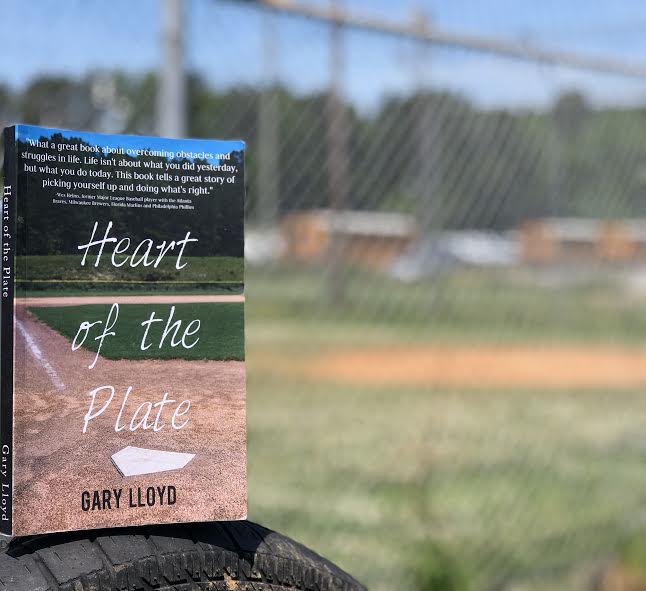
My third book, Heart of the Plate, is one that I wrote rather quickly.
Some may think that it is not of a certain quality, since I wrote it in about four months and had it published five months after the release of Deep Green. That’s for others who read it to judge and not me.
But I will say this: It is a fictional story I had in my mind for a long time, a story of redemption that I wanted to tell. I wrote pages and pages each day because I believed in the story and its message. It’s more than just baseball. It has addiction and overcoming, love lost and love rekindled, heartbreak and uplifting moments. It has something for everyone, and I hope you order a copy and let me know what you think.
Jeff Wright is at the pinnacle of his Major League Baseball career, earning his way into his first All-Star Game. Not long after, Jeff suffers a gruesome, career-ending injury and ventures down a path of self-destruction, and becomes addicted to painkillers. He is arrested for drug possession. Upon completing a stint in a rehabilitation center, Jeff returns to his hometown of Lewis Rock, Georgia, where he discovers that the town’s largest job source, Reynolds Manufacturing, is being sold off and will leave hundreds jobless. He also attempts to rekindle a love that he lost years ago. What begins as mandatory community service for Jeff’s arrest quickly becomes his saving grace. Follow along as Jeff helps his hometown through a difficult time the only way he knows how — through baseball.
The book earned praise from former Major League Baseball players Wes Helms, Matt Guerrier, and Jason Standridge, as well as former college softball head coach Karen Johns.
Read an interview about Heart of the Plate

The sophomore pitcher circled the mound before the first batter stepped into the box, and then he bent over behind the rubber. He extended his left hand and began to use his index finger as a pencil for the cool dirt. It was winter, and the high school baseball season was just underway. He was set to face his high school’s arch rival, one of the best teams in the state of Alabama. The sophomore had already won his first three starts as a varsity pitcher, including a five-inning no-hitter, striking out nine batters in a shortened game due to the mercy rule. He was an ace. But against his team’s rival, he should have been nervous. He was a sixteen-year-old pitching against a great team, after all. But he was as cool as he could be. He was pitching with purpose.
GET VALLEY ROAD: UPLIFTING STORIES FROM DOWN SOUTH HERE
Not long before the game, he stood in his coach’s office in the stadium’s press box, and talked about his purpose with a reporter. His mother died the previous October after battling breast cancer for nearly two years. The family found out about her diagnosis on Valentine’s Day when the sophomore was an eighth-grader, in the drive-thru at a Wendy’s. When she died, his mother was fifty years old. Just before she died, her son promised her two things — that he would marry a woman who reflected her and that he would pitch his way to college baseball.
“When people lose family members, some rarely get the opportunity to talk with them and say goodbye,” he says. “Barring the situation, I feel really thankful I was able to do that. When my mom was on hospice care, I got to be around her a lot. While she wasn’t very responsive, you could tell when she was hearing and listening to you. I got the chance to tell my mom how thankful I was to have her as my mom, and she taught me more (about) life than she would ever know. Getting to tell the person who gave you everything in life how thankful you are for it and how much you love them for the sacrifices they gave to benefit your life is something that will give you peace to any situation. I also promised her things in life that I would accomplish for her – in memory of her.”
He left the press box after a fifteen-minute interview and warmed up for the game. Just prior to the first pitch, he bent down to etch his mother’s initials and the breast cancer symbol on the backside of the pitcher’s mound. He proceeded to hurl a complete-game five-hitter, allowing his only two earned runs in the top of the seventh, the final inning. His team won 3-2. He struck out six batters. He finished his first varsity season with nine wins and one loss for a team that won the area championship.
“The support I had from my baseball team that season was something that was beyond special,” he says. “I felt so close to all those guys and I knew they were behind me supporting me through that time.”
His head coach that season was supportive. After the win over the team’s biggest rival, the coach talked about how his pitcher’s tough situation ministered to his team, how instead of the team ministering to him, his family ministered to the team. He called it amazing.
Over his final two seasons of high school baseball, the pitcher compiled twelve wins against just four losses and a 1.88 earned-run average. He struck out more than one hundred batters.
For his efforts, he earned scholarship offers from several college programs around the Southeast. He chose the one closest to home, to be near his longtime girlfriend and son, who was born when he was a high school junior. His plan was to propose to his girlfriend during one of his college baseball seasons. He did so on the first weekend of the 2017 college baseball season. She said yes.
“I feel like it is a promise kept, and I am blessed to be in the situation I am in,” he says. “I will always look back to my coaches and teammates during the hardest time in my life and see the positive impact they had on my life, and where I am now is because of all they did for me during this time in my life.”
As far as his mound ritual, the pitcher no longer etches his mother’s initials in the mound, but they are written across his glove, so that she will always be there for him every time he steps on a mound. He looks back to that sophomore season as a blessed time.
“Going through things like that will always be hard, but when you have people surrounding you and providing love and encouragement, it gives you a peace about it,” he says.
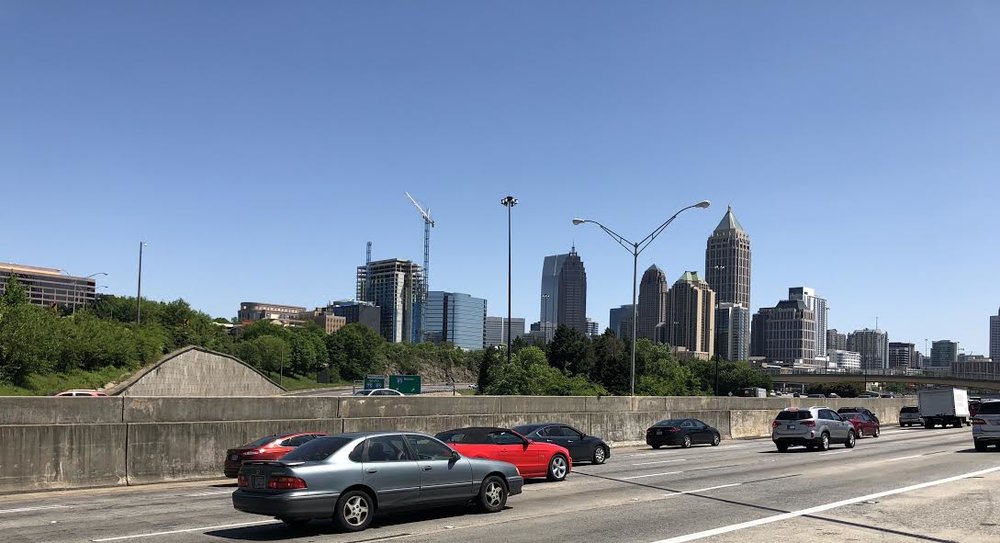
I went to Atlanta this weekend, and if you perused the Georgia headlines, you would have seen this:
A Gainesville, Ga., man was charged with molesting an eleven-year-old girl.
A man was shot outside of a Krispy Kreme.
A middle school student brought a gun to school and showed it to classmates.
A man fired a shot into the air after a disagreement with his Uber driver.
You see these headlines daily. You see them everywhere, in Georgia and California and Europe and Alabama and Canada and everywhere else. It’s maddening. But this isn’t one of those posts. This isn’t a cry for gun control or stiffer penalties for criminals. No, this is a post about, dare I say, some positive things I saw in Georgia this weekend, and they all happened Saturday.
As a group of four of us walked around downtown Saturday afternoon, we encountered a woman who was shouting at no one in particular in a courtyard. I grew concerned as we passed her. As it turns out, she was shouting about despite her circumstances, whatever they are, no one will take her peace and joy in life, no matter what.
We stopped off for some caffeine at a Burger King, and then proceeded toward Underground Atlanta, which has closed its stores for now to renovate and construct new mixed-use developments. We approached a crosswalk, where I heard a man yelling around the corner. Imagine you’re in downtown Atlanta and you hear commotion nearby. What is your first thought?
What we saw was surprising and refreshing. A group of about ten men had gathered on that corner, and one of them was doing all the talking. Men held tattered Bibles and nodded their heads as the one man preached.
We took an Uber that night, a day after one man fired a shot into the air after a dispute with his driver. I sat up front with our driver, who we read in a review was a good conversationalist. He was silent, and I couldn’t stand it. I asked him if he liked his job, and he said that after just a few months, he really enjoys it. I learned that he lived in Texas for 12 years, Tampa Bay for 10, and has been in Atlanta for five.
He had worked in the grocery business, and he was never off work.
“It was too much,” he said.
With Uber, he picks the times he likes to work. He’s his own boss. He typically works from 4 p.m. or 5 p.m. until after midnight, so that he can get his two boys ready for school in the mornings and pick them up in the afternoons.
It was an expensive ride for us, considering it was on a Saturday in downtown Atlanta, but I’m glad he was our driver.
We attended a concert that night, and the main act was not my kind of music. It rattled the walls and shook the blood in my veins. My brother’s ears were ringing two days later. I couldn’t understand almost all the lyrics. But the group’s most popular song ended with these lyrics:
“Hope for the hopeless, a light in the darkness,
Hope for the hopeless, a light in the dark,
We stand for the faithless and the broken,
Hope for the hopeless, a light in the dark.”

My full house is complete.
Two fiction novels and three works of nonfiction.
And due to work and graduate school, I may not be publishing another book for quite a while, despite having several ideas in mind. Who knows, though? Maybe I’ll have another published in the near future. It’s something I love doing.
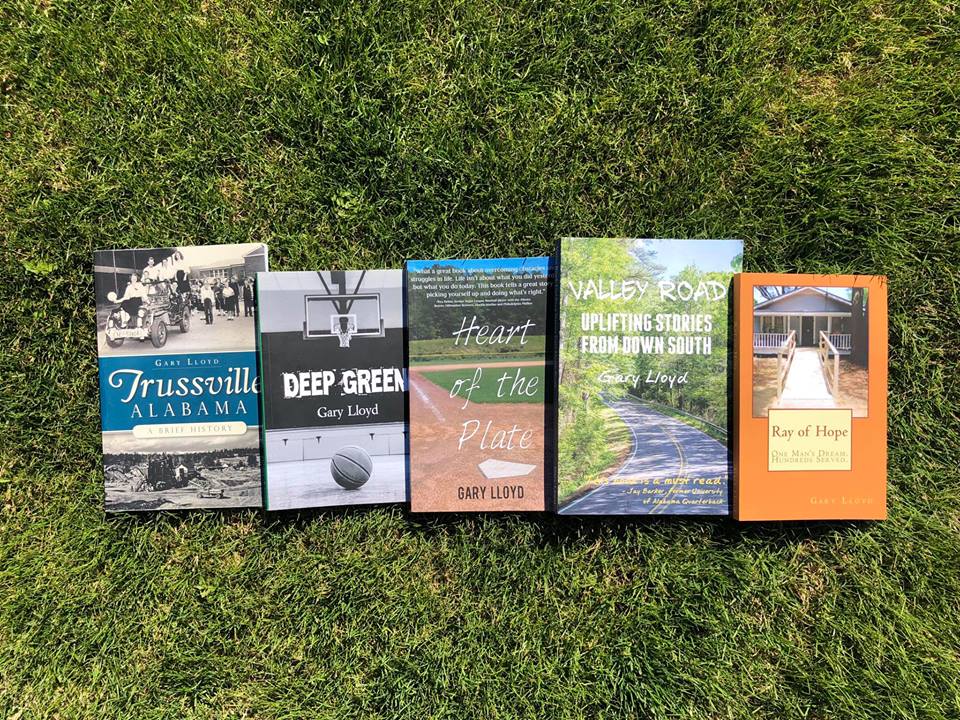
So, in the meantime, why not provide a quick video rundown of Trussville, Alabama: A Brief History, Deep Green, Heart of the Plate, Valley Road: Uplifting Stories from Down South, and Ray of Hope?
In the video, I briefly talk about each book, summarizing the plot and letting you know where you can find each. I even profess my feelings for the Atlanta Braves, a tumultuous relationship that I can’t seem to quit.
Please share this post with your friends!
Check out the video below.

BIRMINGHAM — The Birmingham Bulls of the Southern Professional Hockey League is teaming up with Make-A-Wish Alabama on Saturday, March 17 to raise money for the local nonprofit organization.
Make-A-Wish Alabama grants life-changing wishes for children with critical illnesses in all 67 Alabama counties. There are currently about 300 children in the state waiting on a wish.
Bulls players will be wearing St. Patrick’s Day jerseys for this game, which will be auctioned off after the game to benefit Make-A-Wish Alabama.
The game is set for 7 p.m. March 17 at the Pelham Civic Center against the Virginian Roanoke Rail Yard Dawgs.
For more information, check out http://www.bullshockey.net.
Make sure to support this worthy cause!

All proceeds to benefit Ray of Hope nonprofit
MOODY, Ala. – Author Gary Lloyd has released his fifth book, Ray of Hope.
Jimmy Ray was quiet, shy, and humble, but even the most unassuming people have burning passions in their hearts. Jimmy’s was for the disabled, those in northwest Florida who were stuck inside their homes because they could not afford to have wheelchair ramps built. That bothered Jimmy to his core. He began constructing wheelchair ramps with the help of his wife and young daughter, and along the way, a church ministry was born. It became Jimmy’s mission in life. Men, women, and children volunteered. Money and materials were donated. More than five hundred lives were changed forever. In Ray of Hope, Jimmy’s passion is revealed by family, friends, and more than a dozen people who received wheelchair ramps when they had nowhere else to turn.
Jimmy was Lloyd’s father-in-law, but Lloyd never had the chance to meet him. Jimmy died on Feb. 28, 2010, two years before Lloyd met his daughter, Jessica. Ray of Hope’s publication date is eight years to the day after Jimmy’s death.
“The idea for this book came in 2016 on a ride to the Atlanta airport,” Lloyd said. “Jimmy’s wife, Ramona, was driving Jessica and me there for a trip we were going on, and we spent some time talking about Jimmy and the Ray of Hope organization, which builds wheelchair ramps for those in need. I discovered that the nonprofit had built more than 500 ramps in northwest Florida alone, and I knew that this man’s story, this ministry’s purpose, needed to be told in a book.”
Ray of Hope was published through CreateSpace Independent Publishing. The book is available on http://www.Amazon.com for $10 and on Kindle as an e-book for $7.99. All proceeds from the book’s sales will benefit the Ray of Hope nonprofit organization.
Lloyd is also the author of Trussville, Alabama: A Brief History, Deep Green, Heart of the Plate, and Valley Road: Uplifting Stories from Down South.
Lloyd has been a journalist in Mississippi and Alabama. He grew up in Trussville, Ala., and earned his bachelor’s degree in journalism from The University of Alabama in 2009. He lives in Moody, Ala., with his wife, Jessica, and their two dogs, Abby and Sonny.
For more information, email garylloydbooks@gmail.com. Also visit http://www.garylloydbooks.squarespace.com and Like his author page at http://www.facebook.com/GaryLloydAuthor.
For more information about Ray of Hope, find the “Ray of Hope Wheelchair Ramps” page on Facebook.
-30-