By Gary Lloyd TRUSSVILLE — I remember that bottom-floor classroom, the one on the corner of the building not far from the gymnasium where I tried out for the Hewitt-Trussville … Continue reading A walk through the Cahaba Project
By Gary Lloyd TRUSSVILLE — I remember that bottom-floor classroom, the one on the corner of the building not far from the gymnasium where I tried out for the Hewitt-Trussville … Continue reading A walk through the Cahaba Project
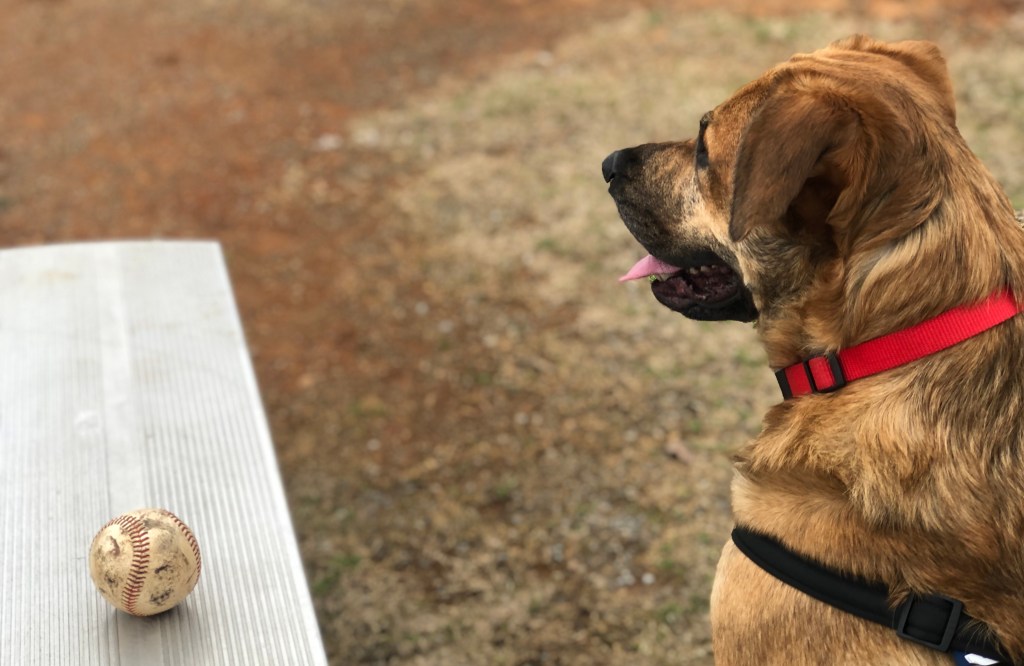
By Gary Lloyd As someone who writes stories, I am conditioned to find the theme, to dig for the hidden meaning like a dog after whatever lies a foot beneath … Continue reading Sandlot Sonny

BESSEMER — A 2017 Point-in-Time Count conducted by three government agencies revealed that more than 40,000 veterans are homeless in America on any given night. These veterans risked their lives … Continue reading Iraq War veteran finds healing at Bessemer ministry
The following story is a chapter in my book, Valley Road: Uplifting Stories from Down South. Get it here. By Gary Lloyd The name of the town is Moody, but … Continue reading Moody

Some views from the 2018 SEC Baseball Tournament in Hoover, Alabama.
Local blood donors saved as many as 225 lives by giving blood during Baldwin EMC’s Spring Into Action drive March 15 in Orange Beach and April 26 in Bay Minette.
The staff from LifeSouth Community Blood Center collected a total of 75 pints of blood, each of which can benefit as many as three people.
The co-op elected to divide the drive between two dates and their two district offices this year in an effort to reach members from the southern and northern parts of their service territory.
“We traditionally host Spring Into Action at our headquarters in Summerdale, which is our most centrally located office,” says Mark Ingram, Baldwin EMC’s vice president of corporate services and public relations. “However, Summerdale is still a bit of a drive from Bay Minette or the beach. Hosting it at our district offices gave our members and residents in those areas an opportunity to donate without distance being a factor.”
In addition to blood donations, non-perishable food was also collected for local distribution.
Ingram says the Spring Into Action drive is a part of Baldwin EMC’s vision to be community involved.
“As a member-owned cooperative, we’re called to do much more for our community than just provide electricity. Our goal is to improve the quality of life for those we serve, and events like this are one of the ways we can do that.”
MONTGOMERY – Alabama Gov. Kay Ivey signed four bills Monday supporting veterans and the military. The governor signed House Bills 58, 83, 88 and 92. Earlier this month at Maxwell Air Force Base, the governor also signed into law House Bill 388, the Military Family Jobs Opportunity Act.
“Throughout my career, I have advocated for our service men and women, and I will continue to do all I can as governor to offer my support to those who have given us so much,” Ivey said. “Alabamians are steadfast in their support for the military, and I am proud to strengthen Alabama’s bond with the military through these five bills I have signed into law.”
HB 58, known as the “Parks for Patriots Bill,” grants free admission to active or retired service members, who are Alabama residents, to state parks operated by the Department of Conservation and Natural Resources. An appropriate active or retired military identification card, a driver’s license with a military veteran designation, a valid Department of Defense Form or any other documentation prescribed by law or administrative rule must be shown to obtain free admission. In November 2017, Ivey announced that entry into Alabama’s State Parks was free for all veterans. At that time, Rep. Dickie Drake said he planned to file a bill in the 2018 Regular Session that would permanently codify Ivey’s Parks for Patriots plan into law.
“I am so proud to have sponsored a bill that allows veterans and current military to have free admission to Alabama State Parks,” Drake said. “With Memorial Day close at hand, this should be something nice for our Veterans and our military who have given so much and make so many sacrifices; we can never fully repay them.”
Ivey also signed HB 83, the Veterans Employment Act, and HB 88, which gives preference in competitive bids on state government contracts to businesses owned by veterans. Drake also sponsored HB 88. The Veterans Employment Act, sponsored by Rep. Connie Rowe, gives a tax credit to small businesses that hire unemployed veterans.
“This was an opportunity to help both our veterans and small businesses at the same time. Incentivizing the hiring and retention of our military veterans by Alabama small businesses allows us to acknowledge their service and provide them with more job opportunities,” Rowe said. “Small businesses will benefit, not only by qualifying for the tax incentive, but also by bringing employees into their businesses with the admirable traits and skills acquired during military training and service. It’s a win-win piece of legislation.”
HB 92, sponsored by Rep. Barry Moore, allows a person who meets the military service and award requirements to be issued a windshield placard displaying an appropriate military honor or veteran status. The placard will permit parking in designated military parking places. The bill makes it unlawful for a person to park in these designated military places without distinctive placard.
“In our great nation, we recognize that freedom is a right given by God, but we also know that right is protected by those who fight for it,” Ivey said. “I am grateful for the hard work and support of the Alabama Legislature for passing strong legislation supporting our service men and women.”
Earlier this month at Maxwell Air Force Base, Ivey signed into law HB 388, the Military Family Jobs Opportunity Act. Through this bill, professional licensing boards are required to issue licenses and certificates to military spouses who hold licenses and certificates from other states. In the case a state has lesser requirements, the state will issue temporary licenses. Sen. Gerald Dial and Rep. Thad McClammy were the sponsors of this legislation.
BIRMINGHAM – The U.S. Attorney’s Office today launched the Birmingham Safe Neighborhoods Task Force to offer prevention and community outreach programs within the city.
This task force will complement the law enforcement work of the Birmingham Public Safety Task Force, which was announced last month, in combined efforts to reduce violent crime in the Birmingham area, announced U.S. Attorney Jay E. Town.
The Birmingham Safe Neighborhoods Task Force will engage law enforcement, government agencies, nonprofit organizations, and corporate citizens in a coordinated and collaborative process to ensure parity in prevention, enforcement, and re-entry efforts. Building and restoring relationships between communities and law enforcement is a primary function of the task force.
“This task force will endeavor to meaningfully engage citizens of Birmingham with regard to how we can improve the station of the entire city,” Town said. “It is no longer enough just to prosecute our worst offenders. Prevention and outreach programs that decrease criminal activity and increase opportunity must accompany our overall crime reduction initiative,” he said. “I appreciate the leadership of our mayor, our sheriff, and all of our task force members for their willingness to engage in this worthy challenge.”
Members of the Birmingham Safe Neighborhoods Task Force will collaborate to develop and conduct community programs aimed at education, community-police relations and building opportunities that will benefit the entire community.
“As stated before, we are here for as long as it takes,” said Jefferson County Sheriff Mike Hale. “I have no doubt this multifaceted initiative is going to have a very positive impact on crime in general, but most especially violent crime. Taking violent criminals out of these neighborhoods and locking them up for 15 or more years will return these neighborhoods back to the good folks and improve their quality of life dramatically. That is the goal. It will be met.”
Building and improving trust and communication between the community and members of law enforcement will be a critical function of the BSNTF, Town said. That will include encouraging patrol officers, deputies and agents to increase general and positive interactions in the community, whether that be helping to spruce up a community park or passing out free ice-cream coupons to neighborhood kids.
The two Birmingham task forces incorporate principles of Project Safe Neighborhoods, the Department of Justice’s violent crime reduction strategy, and the National Public Safety Partnership. PSN is a nationwide Justice Department program committed to reducing gun and gang crime by networking existing local programs that target gun crime and supporting those efforts with training and funding.
U.S. Attorney General Jeff Sessions announced PSP last year as a training and technical assistance program designed to enhance the capacity of local jurisdictions to address violent crime in their communities. He selected Birmingham as one of the initial 12 locations to participate in the program. The PSP and PSN programs both reinforce the federal, state and local task force model as one of the most effective ways to reduce violent crime.
The baseball coach felt as if the pastor was talking directly to him. Sure, there was a congregation full of people, but the message was so pointed, so personal, that it felt like a one-on-one conversation.
The sermon was about stepping outside of your comfort zone. The coach had always talked to his high school players about doing the right thing, about what he wanted them to do. He did the same when he was the coach at his previous job. He had never really shown them.
“Baseball is just kind of an avenue for us,” he says.
When the church service was over and he went outside, he told his wife that he wanted to start a Bible study in their home with any player who wanted to come. He then called a friend, who had been a youth pastor at one time. He was all in to help. The next morning, the coach was preparing to tell his players of his new idea when one knocked on his door. He asked his coach if he would be all right with the players starting a Bible study in the locker room. He told the player that he would not believe what happened the day before.
“It was like God’s way of saying, ‘This is what you should do,’” he says.
The Bible study started the following Sunday. It was not mandatory, and players were told that it would not affect their playing time. It was totally separate from baseball. The coach figured on maybe a handful of players showing up. Fifteen of the eighteen on the roster came. Those numbers remained steady. Every Sunday during the baseball season, the players met at their head coach’s home for food, Bible study and fellowship. Sometimes, the studies lasted fifteen minutes. Sometimes, they lasted an hour. Afterward, they would watch the Sunday Night Baseball game on ESPN or play Wii. Players learned a lot about each other. They opened up about family, girlfriends, choices, college. They grew closer.
“It was an unbelievable time of team bonding away from baseball,” he says.
The coach’s favorite memory from those Bible studies is about a player who was selected in the Major League Baseball draft. He decided to instead play football and baseball at an Alabama university. That player came back to his old stomping grounds one Friday night for a football game. The coach stood with him on the sidelines. He asked if he missed the Friday night lights, playing sports at the high school level. The player said that he really didn’t. The coach was floored. How could an athlete not miss high school sports, his glory days? The one thing the player said he missed were those Bible studies.
“It just humbled me,” the coach says.
The coach has continued the Bible studies since becoming the head baseball coach at his third high school. After one of the studies, one of the boys called the coach thirty minutes after everyone left his home. He wanted to come back. They sat on his back porch for two hours, just talking. Without the Bible study, that relationship may have never deepened.
“I think it’s more than a Bible study,” he says. “It brings kids closer together. To me, that’s the special part. And that’s the important stuff. We are giving them an avenue to talk to us.”
The Bible studies happen during the baseball season, though on some occasions they have begun in December because the kids wanted to start them earlier. The coach says the importance varies from kid to kid, from team to team. Each one has a different personality.
“I just think we’ve seen some kids grow closer together,” he says.
The coach led his current team to its first baseball state championship in school history not long ago. He will not go so far as to say the Bible study was why the team won it all, but it was clearly a factor. That team, he says, just had something different about it. They were close. During the playoff run, at Bible studies on Sundays, baseball was not even a topic of conversation.
“We love it,” he says.
At a football game about five months after winning that state championship, the baseball team returned for the ring ceremony. There were four seniors on that team, and they had all started college at three different institutions. This was their first time being back together since graduating. The coach watched as they sat at their own table in the stadium’s press box, just sharing their experiences as college freshmen. It took the coach and his wife back to when they originally started the Bible study.
The coach gestured toward the group and said to his wife, “Look how special that is.”
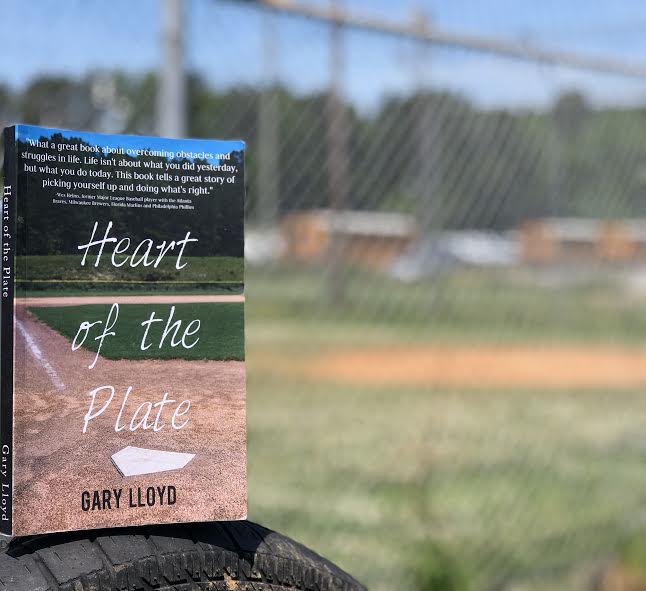
My third book, Heart of the Plate, is one that I wrote rather quickly.
Some may think that it is not of a certain quality, since I wrote it in about four months and had it published five months after the release of Deep Green. That’s for others who read it to judge and not me.
But I will say this: It is a fictional story I had in my mind for a long time, a story of redemption that I wanted to tell. I wrote pages and pages each day because I believed in the story and its message. It’s more than just baseball. It has addiction and overcoming, love lost and love rekindled, heartbreak and uplifting moments. It has something for everyone, and I hope you order a copy and let me know what you think.
Jeff Wright is at the pinnacle of his Major League Baseball career, earning his way into his first All-Star Game. Not long after, Jeff suffers a gruesome, career-ending injury and ventures down a path of self-destruction, and becomes addicted to painkillers. He is arrested for drug possession. Upon completing a stint in a rehabilitation center, Jeff returns to his hometown of Lewis Rock, Georgia, where he discovers that the town’s largest job source, Reynolds Manufacturing, is being sold off and will leave hundreds jobless. He also attempts to rekindle a love that he lost years ago. What begins as mandatory community service for Jeff’s arrest quickly becomes his saving grace. Follow along as Jeff helps his hometown through a difficult time the only way he knows how — through baseball.
The book earned praise from former Major League Baseball players Wes Helms, Matt Guerrier, and Jason Standridge, as well as former college softball head coach Karen Johns.
Read an interview about Heart of the Plate
 Gary Lloyd Books