An excerpt from ‘Ray of Hope’

Ray of Hope is a book that will help people.

Every copy sold goes directly to the Ray of Hope Wheelchair Ramps ministry in Pace, Florida.

I wanted to provide you a chapter from the book, one of my favorite interviews out of the twenty-five or so I recorded. It was recorded in November 2017 with a woman not quite 102 years old.

Enjoy.

Everybody helped everybody

I have recorded and transcribed thousands of interviews. I have heard so many different things. I have heard football coaches and linebackers talk about defining stops on third down. I have heard city councilmen filibuster about tight budgets and elections. I have spoken to a teenager who had beaten cancer twice, but I didn’t get to interview him after his third bout. I have talked with a woman who drove more than one hundred people home in a snowstorm, and another woman who lost her wedding ring in a tornado. I have recorded interviews with school principals about inspiring teachers, lawmen about hardened criminals, and rich celebrities about themselves.

I could go on and on, but I’ll stop there. Just after Thanksgiving in 2017, I recorded the interview that topped them all.

Imogene’s family was one of the first to settle in Pensacola, Florida, and she worked the late shift for seventeen years at Baptist Hospital. She could get everywhere by walking. She told me about the hurricanes that have affected Pensacola, and the names of people in her neighborhood in the 1920s. That gave me pause. 1920s?

“I didn’t know I’d every reach this point in life, but I’m still here,” she softly told me.

I asked Imogene, as politely as I could, how old she was. She said she was one-hundred-one, and would be one-hundred-two in February 2018. Her father was born in 1889.

“I know Pensacola real well,” she said. “I love talking to people because I am a native here. We had all the names that meant something.”

She told me that she got her wheelchair ramp just before summer in 2016. A friend had received a ramp from Ray of Hope, so that was how she connected with the group. She said her daughter lives with her, to help her with day-to-day activities. She is not in a wheelchair, but struggles to maintain her balance. She uses a cane while her daughter helps her down the ramp.

“When you get to be one-hundred-one years old, and trying to get around, a ramp does help,” Imogene said. “It is a wonderful help in getting in and out of the house.”

She said that Ray of Hope had it built in “rapid time,” completed just after lunch.

This is precisely where her impassioned speech began. I asked her about Ray of Hope performing this selfless act of kindness for her, and what that means to her in a time dominated by political and crime-ridden headlines.

“The whole world has gone crazy,” she said.

The newspaper story sticking in her mind that day was already a month old, reported in October 2017, but it was so heinous that she decided to tell me about it. A three-hundred-pound woman living in Pensacola, the same town she has called home for most of her life, was charged with murder by authorities for allegedly sitting on her young cousin as punishment for misbehaving, causing the girl to die of cardiac arrest. Imogene shared the story with her granddaughter, who lives in Atlanta.

“What’s the matter with these people?” she asked.

She said that every time the newspaper comes to her house, she cringes. She takes no chances and stays home at night. You don’t know what or who you will run into anymore, she said.

“People are absolutely insane,” Imogene said.

A short pause gave me just enough time to interject a question. I asked Imogene if today’s negativity makes what Ray of Hope does that much more impressive, that much more of a blessing. She answered by telling me about her late shift working at the hospital, how a guard used to walk her and other nurses to their cars, just to be safe.

It is hard to keep people on track when you are interviewing them. I learned, pretty quickly, that is a completely another task to do so with someone who is one-hundred-one years old. So, I told Imogene that I had no more questions, that I just enjoy listening to people’s stories.

She went on to tell me, again, that she knew Pensacola well enough to walk anywhere she wanted. All of her relatives lived within walking distance of her growing up. She told me a new jail was being constructed nearby, something she believes won’t be big enough to keep all the bad people running around the streets these days. She again brought up the article she read about the woman sitting on and killing her little cousin.

“I said, ‘Dear God, what in the world is happening to people?’ Lucifer is loose, and is he busy.”

I again took this opportunity to mention the positivity that Ray of Hope provides to her section of the world, that even though many things seem dim and grim, that group is doing right, that it is on a mission from God. She agreed.

She briefly talks about Ray of Hope again, stating that she has a tremendous horror of falling, and will not attempt to use the ramp when it is wet. She was then back to her speech, saying they — who is they? — built to the east side of Escambia Bay and to the north of her. The Gulf of Mexico was to the south, and commercialism is now moving west.

“Every little spot you see something going up,” she said.

I tell her that I did think of another question, about the founder of Ray of Hope, Jimmy Ray. I asked her what her thoughts were on someone helping others the way he did. She told me that she had a cousin who lived on Garden Street, and the property right by her house was sold, and now she is worried about what will be put up there.

“We don’t have any laws here that protect us from people just putting up anything,” Imogene said.

How do you tell a one-hundred-one-year-old woman that she is not answering your questions, that she is not helping? You can’t. You just listen, listen and listen. You remain patient through all the extraneous information and hope for a nugget of good information. I tried again with a pointed question. I asked if Ray of Hope building more than five hundred wheelchair ramps surprised her. She answered about laws protecting property.

“We have to have some,” she said. “You can’t give Mother Nature away.”

I said “Yes, ma’am,” and thanked her for her time. My tape recorder showed that we had talked more than twenty-two minutes. I told her I couldn’t think of anything else to ask. She paused before saying that the volunteers had two young girls with them helping build her ramp.

“If we had more people doing things like that, it would begin to help a little bit,” she said.

The nugget of good information finally appeared. She went from focusing on the negativity in the world to the good stuff. She told me that she reads the newspaper every day, which I already knew. This time, however, she said that the first thing she reads are the obituaries, to check for people she knows “who have gone to the great, wonderful beyond.” She said she hopes that there are some people left on this earth who can rebuild what’s left of a broken world, like Ray of Hope.

“People don’t know what work is,” Imogene said. That’s what we’ve got to look at. We have to have some better people working on things and trying to get people to understand how to help people. It’s sickening to think about the things that are going on.”

At this point, after twenty-five minutes, I can tell I’m getting through to her. I tell Imogene that I’m trying to do my part to put out some good stories about Ray of Hope, to bring some positivity to her corner of the world.

“Let’s hope it’ll come soon, because every day I find new things that are happening,” she said.

Imogene went back in time in her mind. She grew up during the Great Depression, and a family member had a restaurant in downtown Pensacola. Leftover food was taken home and divided amongst relatives. An aunt had a small farm in Cantonment, Florida, and she would fill her car to its roof with vegetables for the family. Seeing those things as a girl helped Imogene do nice things for others as she got older. She would have children pick blackberries and bring them to her house. She made them blackberry cobbler, which they would eat under the trees.

“Everybody helped everybody,” she said. “People were willing to help each other.”

She said simple acts such as those kept people together, kept them doing something worthwhile. She said that today, people want to come to the United States because they believe the sidewalks are made of gold.

“Anything worth having is worth working for,” she said. “But people don’t see that.”

I told Imogene that I planned to have the book done by spring or summer of 2018, and that I would surely drive to the Pensacola area with a box of books for people. I told her that I would let her know when I was coming.

“Well, let’s hope we don’t run out of space before that happens because they’re piling in here now,” she said, back on her impassioned plea for city growth to slow down just a little bit.

Then, one more nugget.

“There are people that are trying to do the right thing to help each other,” she said. “There are good people, if we can just find them.”

I thank her one final time, especially for that last comment, and, without fail, Imogene was back talking about how things used to be, and how much different society is today.

“Well, we’ll keep trying anyway,” she said.    
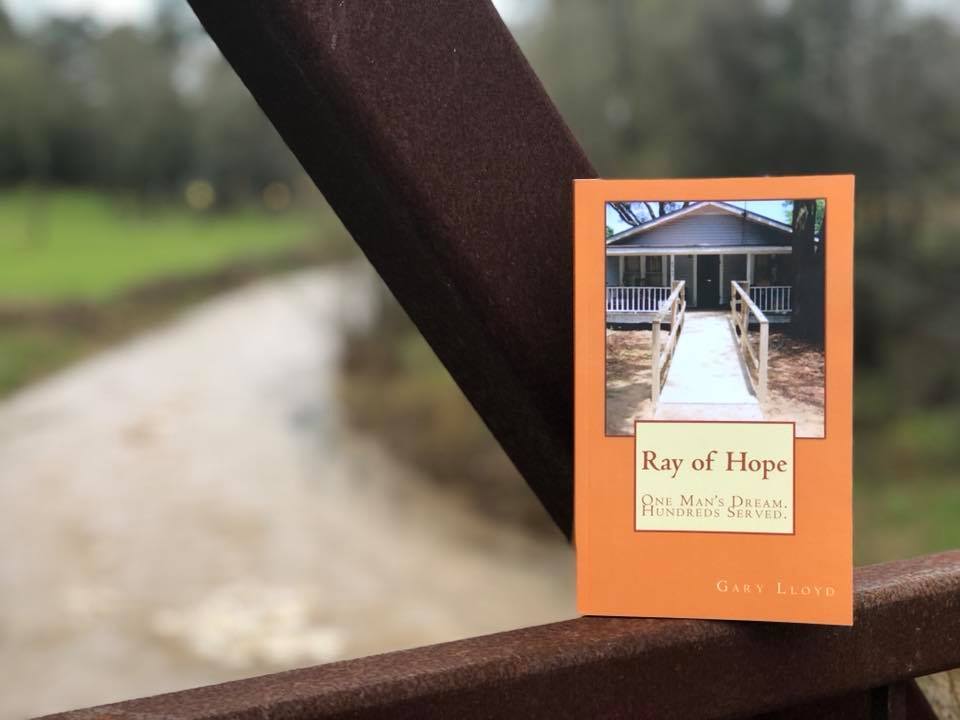
Get Ray of Hope here.

A rundown on my 5 books

My full house is complete. 

Two fiction novels and three works of nonfiction. 

And due to work and graduate school, I may not be publishing another book for quite a while, despite having several ideas in mind. Who knows, though? Maybe I’ll have another published in the near future. It’s something I love doing.

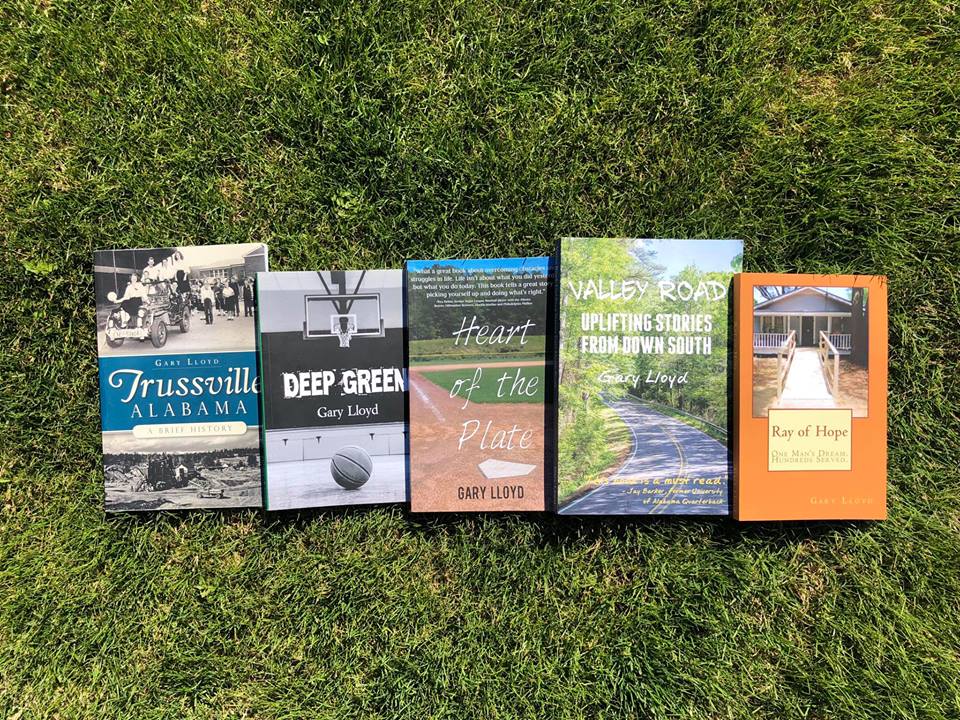
So, in the meantime, why not provide a quick video rundown of Trussville, Alabama: A Brief History, Deep Green, Heart of the Plate, Valley Road: Uplifting Stories from Down South, and Ray of Hope?

In the video, I briefly talk about each book, summarizing the plot and letting you know where you can find each. I even profess my feelings for the Atlanta Braves, a tumultuous relationship that I can’t seem to quit.

Please share this post with your friends!

Check out the video below.

Birmingham hockey team partners with Make-A-Wish

BIRMINGHAM — The Birmingham Bulls of the Southern Professional Hockey League is teaming up with Make-A-Wish Alabama on Saturday, March 17 to raise money for the local nonprofit organization.

Make-A-Wish Alabama grants life-changing wishes for children with critical illnesses in all 67 Alabama counties. There are currently about 300 children in the state waiting on a wish.

Bulls players will be wearing St. Patrick’s Day jerseys for this game, which will be auctioned off after the game to benefit Make-A-Wish Alabama. 

The game is set for 7 p.m. March 17 at the Pelham Civic Center against the Virginian Roanoke Rail Yard Dawgs.

For more information, check out http://www.bullshockey.net.

Make sure to support this worthy cause!

New book chronicles Florida wheelchair ramp ministry

All proceeds to benefit Ray of Hope nonprofit
 
MOODY, Ala. – Author Gary Lloyd has released his fifth book, Ray of Hope.

Jimmy Ray was quiet, shy, and humble, but even the most unassuming people have burning passions in their hearts. Jimmy’s was for the disabled, those in northwest Florida who were stuck inside their homes because they could not afford to have wheelchair ramps built. That bothered Jimmy to his core. He began constructing wheelchair ramps with the help of his wife and young daughter, and along the way, a church ministry was born. It became Jimmy’s mission in life. Men, women, and children volunteered. Money and materials were donated. More than five hundred lives were changed forever. In Ray of Hope, Jimmy’s passion is revealed by family, friends, and more than a dozen people who received wheelchair ramps when they had nowhere else to turn. 

Jimmy was Lloyd’s father-in-law, but Lloyd never had the chance to meet him. Jimmy died on Feb. 28, 2010, two years before Lloyd met his daughter, Jessica. Ray of Hope’s publication date is eight years to the day after Jimmy’s death.

“The idea for this book came in 2016 on a ride to the Atlanta airport,” Lloyd said. “Jimmy’s wife, Ramona, was driving Jessica and me there for a trip we were going on, and we spent some time talking about Jimmy and the Ray of Hope organization, which builds wheelchair ramps for those in need. I discovered that the nonprofit had built more than 500 ramps in northwest Florida alone, and I knew that this man’s story, this ministry’s purpose, needed to be told in a book.”

Ray of Hope was published through CreateSpace Independent Publishing. The book is available on http://www.Amazon.com for $10 and on Kindle as an e-book for $7.99. All proceeds from the book’s sales will benefit the Ray of Hope nonprofit organization.
 
Lloyd is also the author of Trussville, Alabama: A Brief History, Deep Green, Heart of the Plate, and Valley Road: Uplifting Stories from Down South. 
 
Lloyd has been a journalist in Mississippi and Alabama. He grew up in Trussville, Ala., and earned his bachelor’s degree in journalism from The University of Alabama in 2009. He lives in Moody, Ala., with his wife, Jessica, and their two dogs, Abby and Sonny. 
 
For more information, email garylloydbooks@gmail.com. Also visit http://www.garylloydbooks.squarespace.com and Like his author page at http://www.facebook.com/GaryLloydAuthor. 

For more information about Ray of Hope, find the “Ray of Hope Wheelchair Ramps” page on Facebook.

-30-

My top 10 moments from 2017 high school football season

Postseason lists seem to be popular, so, on a whim, I decided to make my own. 

These are the top 10 moments I experienced from the 2017 high school football season. Please know that these are only stories I wrote from games I attended. I can’t legitimately comment on a game I didn’t attend. 

So here we go.

10. The question mark about Briarwood Christian coming into 2017 was the quarterback position. Replacing William Gray was going to be tough. Michael “Magic Mike” Hiers stepped up to the challenge. Look for a feature on Hiers on http://www.280Living.com soon.

9. Mountain Brook’s Harold Joiner shows how great of a running back he is in the season opener, rushing for 195 yards and four touchdowns against Gulf Shores. One of his scores, a 19-yard touchdown run, included juking a defender and diving for the pylon from four yards out. 

8. Carson Eddy leaves a strong legacy at Briarwood Christian, including a pretty funny nickname. One of his teammates, Carson Donnelly, will beat you at ping pong.

7. The trilogy matchup between Briarwood Christian and Wenonah was supposed to be epic. Instead, the Lions roared.

6. Chelsea fell to 0-6 after a 41-28 loss at Gardendale, but that record meant absolutely nothing. The Hornets fought hard.

5. Mountain Brook scores 25 unanswered points against Huffman in a game the Spartans could have quit on. 

4. It was the only time I saw Hoover in 2017, but the 59-7 win over Oak Mountain showed you everything you needed to know about the Bucs, who went on to win the Class 7A state title.

3. The Spartans fall at Thompson in Class 7A second round, where Taulia Tagovailoa showed how great of a quarterback he is.

2. David Robertson gets hot in the freezing cold to lead Homewood to a thrilling comeback over Fort Payne in the Class 6A playoffs.

1. Pinson Valley and Clay-Chalkville battle in the Class 6A semifinals, a game that meant so much more than a trip to the state championship

That’s my list. What are your favorite moments from the 2017 season?

‘I have fought a long fight’

I can count the number of concerts I have attended on one hand.

In high school, I saw P.O.D. in downtown Birmingham with a few friends.

There was the time last year when Colt Ford, Justin Moore and Brantley Gilbert came to Birmingham one warm night. There was the time Morgan Wallen, Nelly, Chris Lane and Florida Georgia Line shared the stage on a cold night at the Oak Mountain Amphitheatre. 

But this week, I tried something different. My wife and I went to Iron City in downtown Birmingham, a venue that fills up an hour before the opening act takes the stage. We went to see Walker McGuire and Kane Brown.

We stood in a line that wrapped around two buildings, among teenage girls with Kane Brown photos used as their iPhone wallpapers, with twenty-somethings who could have used perhaps six more inches of material on their dresses. 

Inside, we smelled enough cheap cologne to singe nose hairs and tried to find a quiet spot on the mezzanine. It was crowded, loud, hot, and I felt as if these types of events had passed me by. I’d be lying if I said I was looking forward to standing for three straight hours amongst the screamers and the beer-drinkers. 

But something great, in addition to the music, happened.

Up on the mezzanine were a dozen or so reserved tables. We stood directly behind one, and I mentioned to my wife, “Must be VIP.”

The table’s occupants showed up close to showtime, both women. One was bald, with gold crosses dangling from her ears. She was there to see Kane Brown, and she was excited. She even brought a small sign that referenced one of the country artist’s songs. It read, “This Is My ‘Last Minute Late Night’ Before My Surgery.” Surgery was underlined. She taped that small sign to the mezzanine railing, hoping the budding country star would see it. 

As the night went on, she asked my wife to take photos of her and her friend. My wife, of course, did.

I found out the woman, named Merin, has Stage 2 Triple Negative Breast Cancer, diagnosed June 5 of this year. She had port surgery just over a week later and has since had four rounds of Red Devil chemotherapy, and twelve treatments of Taxol and Carboplatin. One treatment a week for twelve weeks.

Someone at the concert asked when Merin, from Pell City, was having surgery. The surgery is this Dec. 12, a double mastectomy and reconstruction. She will have to spend four or five days in the hospital, and will also have four drains and expanders for a few months. 

“It was very important to me to be able to have a fun night out,” the woman told me. “I’ve only had a six-week gap in between my chemo treatments and surgery day.”

She told me that she was in Atlanta for the Luke Combs concert the previous night. She was having her own “last minute late nights” before life changes for a long while. 

“After surgery I really won’t be able to attend any more concerts for a while just because of risk of getting sick or bumped into,” she said. “I don’t know how after surgery I will be feeling. The doctors told me around a year or so. My next concert I’m going to shoot for is Florida Georgia Line, Luke Combs or Carrie Underwood.

“I have fought a long fight,” she said. “You always think, ‘Oh my, I feel bad for someone who has cancer.’ But until you live it you really have no idea how bad it is.”

It is tough financially and emotionally. The woman has a seven-year-old son she calls “wonderful,” and he needs his mother. He has had to help her more than any kid should have to. It’s not fair to him, she told me. 

“I will be glad when this is all over with so he can be a kid again, and I can take back my role as mom,” she told me. “I trust in the Lord to guide my family and I in the right direction. With Him, anything is possible.”

The concert was awesome, and I know this woman enjoyed it. I could see it on her face, hear it in her screams as Kane Brown performed “Last Minute Late Night” and “Learning” on stage. 

Kane Brown never saw her sign, as far as I know. The room was too dark at times, and too bright with purple lights at others. I wish he would have seen it, and gotten to meet this special woman.

I checked Kane Brown’s social media channels two days after the concert, just to see if he posted anything from his trip to the Magic City.

His two Tweets since the show: “My job’s to bring light into other people’s lives” and “You’re special.”

If he didn’t see that woman’s sign, you could have fooled me with those Tweets.

Communities win Clay-Chalkville, Pinson Valley semifinal game

PINSON — I’ve waited seven years to write this story, and I hope I get it just right.

I have wanted this game for so long, an intra-ZIP-code tilt between the team with the terrorizing defense anchored by the future SEC defensive tackle against the clicking-on-all-cylinders offense led by the future — most likely — SEC quarterback.

I wanted to write about so much more than just the game. I wanted to write about these communities, their people, and what they went through when I covered their tense city council meetings, spoke to their creative writing and journalism classes, and cringed through the words I typed about school lockdowns and teachers arrested for inappropriate relationships with students.

So, here goes.

I became a local news editor here in November 2010, covering Trussville and Clay. Not long after, Pinson was added to that coverage area.

I covered a lot in Pinson, good and bad.

I sat for a couple hours on an uncomfortable couch with an old man in a house on Main Street, talking about the weather records he kept for more than six decades. I wrote about crashes on Highway 75 and Highway 79 that took young lives.

I wrote about an upstart public library that won a grant for a 3-D printer and asked people to come fill out Valentine’s Day cards to be delivered to kids at Children’s Hospital. I covered robberies, burglaries, stolen utility trailers and methamphetamine trafficking.

I watched as a middle school principal was duct-taped, literally, to a hallway column by giddy students who paid one-dollar bills for twelve-inch strips of tape to raise money for office operating expenses. I was yelled at over the phone by the wife of a man I had written about. He had been charged by the sheriff’s office with a horrible, unspeakable crime against children.

I wrote about Pinson Valley High School’s unique art class, which put on a special effects performance one night that both thrilled and horrified me. It was great. I also typed words about a coyote attacking a Dachshund, and a hit-and-run involving a car and a three-hundred-pound pig. Seriously.

I put words in newsprint about a silver pot that cooked a Guinness World Record number of butterbeans. I also had the unfortunate task of reporting on a Pinson church, among others, vandalized with red spray paint scrawled across its front doors.

You’ve had it all, Pinson. Good and bad.

And now your Indians, 14-0 for the first time ever, will play for the Class 6A state championship at Bryant-Denny Stadium in Tuscaloosa against Wetumpka. Another first, and potentially the best story to ever come out of your town.

I spoke to a former Pinson City Council member just hours before kickoff. He was ready.

“We are fortunate to have the buzz in our community,” he said. “We’ve never played in December, never won more than nine games in a season. To be able to play your No. 1 rival in this situation is what lifetime memories will be made of for the players, the fans and community. Sometimes just believing in yourself can lift your town, and today Pinson believes.”

Pinson had reason to believe, despite a slow start.

The Clay-Chalkville defense had a lot to do with that. The Indians led 10-7 at halftime, and scored 27 second-half points to win 37-7. Junior quarterback Bo Nix completed 24-of-34 passes for 256 yards. He threw three touchdowns and was intercepted once. Senior Khymel Chaverst rushed 16 times for 123 yards and two touchdowns.

I asked Pinson Valley head coach Patrick Nix if this game was what high school football was all about — two great teams, separated by just a few miles, playing in the December cold.

“Absolutely,” he said. “The kind of atmosphere it was, you can hardly hear what’s going on on the field with everything going on. It is absolutely what it’s all about. Overall a very clean game against two passionate rivals, teams that on paper and proximity don’t like each other a whole lot but respect each other greatly. I think you saw that in the play and how it was handled tonight.”

I asked Clay-Chalkville head coach Drew Gilmer, a Pinson Valley High School graduate, the same question. It was as if the two head coaches consulted each other on the answer.

“This is what it’s all about,” Gilmer said. “This is what makes it fun. You need two teams like us, so close together, to get to play in an environment like this. It’s good competition. We get after each other a little bit but we have a lot of respect for one another. They do a great job, and we wish them all the luck.”

But before Pinson Valley plays Wetumpka for the blue map Dec. 8 at 7 p.m., we must cover the dynamic between Pinson and neighboring Clay, at least in terms of what I covered for a few years.

I was mostly drawn to both schools’ athletic teams, particularly football. There has been a lot of crossover. Gilmer spent one year as a volunteer coach at Pinson Valley, his alma mater. Cougars offensive coordinator Jon Clements had the same position at Pinson Valley for three seasons. Gene Richardson, on the Clay-Chalkville staff, was the wrestling head coach and an assistant football coach at Pinson Valley for years. Chris Mills, a Clay-Chalkville High School assistant principal, previously served as the offensive coordinator and soccer coach at Pinson Valley.

Pinson has its own ZIP code — 35126. It shares that with Clay, which, due to not having completely set city boundaries, does not have its own. The Clay Post Office came close to shutting down in 2013. When purchases are made from online retailers that require a ZIP code to be entered, some of that revenue goes to the cities with the ZIP code listed — Pinson, and in some cases, Trussville. Clay misses out.

In 2014, Clay-Chalkville High School debuted a swanky new artificial turf football field, which came to be from a partnership between the city and Jefferson County Schools. The city ponied up a couple hundred thousand dollars for the project. Meanwhile, the field at Pinson Valley High School’s campus was overgrown with weeds in some places, just spots of dirt in others. Pinson missed out.

That same year, 2014, Clay-Chalkville went on to complete an undefeated season and won the Class 6A state championship. It didn’t come without struggle. Prior to the season, a promising linebacker died suddenly. A running back’s mother died in the middle of the season. The Winn-Dixie on Old Springville Road closed, an enormous tax revenue hit for the city. The Cougars’ team captain and stellar running back tore his ACL in the playoffs.

That was a lot to overcome. As a city, as a school, as a team. But Clay-Chalkville did it.

Now it’s Pinson Valley’s turn. The Indians have defeated their rivals from Clay three times in a row now, after the Cougars reeled off wins in the first ten matchups. A state championship, especially in football, brings so much positivity to a school, a community.

Just ask Clay-Chalkville High School Principal Michael Lee.

“The significance of a successful athletic program in a school and community is a vital factor in a healthy school environment,” Lee said. “Athletics, along with strong academics and the arts continue to be the backbone of a school and the thing that brings us together in our communities.

“Friday night football is powerful and means so much to so many people. Often times it brings people with nothing in common together. An AHSAA state championship brings pride and a sense of belonging to your school and citizens in the community. It also brings state and national notoriety to your school and the other great programs such as band, cheerleading, and school news groups that other students participate in. The relationships, opportunities and benefits are profound.”

These communities and schools are the real winners from Friday’s Class 6A semifinal game at Willie Adams Stadium, as Lee stated. A packed facility, a tremendous sense of pride, neighboring cities pitted against each other — this is what high school football is all about. And you carried yourselves well, Pinson and Clay.

“The memories run deep with Pinson,” said a former Clay-Chalkville player who was at Friday’s game. “Also, it was fun because everyone always knew everyone. It’s basically the same town. Same ZIP. Same type families. Now that Trussville doesn’t play Clay this has become the team kids look forward to.”

Bring it home, Indians. Regardless of this heated rivalry, I’m willing to bet those you share a ZIP code with will be pulling for you.

I will be, too.

Book of inspiring stories releases Sept. 15

MOODY, Ala. — Gary Lloyd has released his fourth book, Valley Road: Uplifting Stories from Down South.

The book is broken down into three parts: People, Places and Play. 

In the People section, Lloyd tells stories of inspirational people, from a BMX stunt team motivating a school of elementary students to a man with severe Alzheimer’s miraculously remembering how to play a specific song on the piano. 

In the Places section, Lloyd takes readers on a heartening and descriptive ride through the foothills of the Appalachian Mountains, to the concrete jungle of New York City, to the Green Monster at Fenway Park, to the azaleas at Augusta National Golf Club, and many places in between. 

In the Play section, high school coaches from around the Southeast tell their favorite stories, words that have never made the Sports section of their local newspapers. In exclusive interviews with Lloyd, they talk about why they became coaches, about basketball saving lives, about baseball players gathering for Bible studies, about a serve-others-first mentality.

“This has been a book I wanted to put together for a long time,” Lloyd said. “So much focus these days is on the 24-hour news networks, the horrible things that people say and do. I believe this is a book that many people need to read these days. They need to know that life in the 21st century is about much more than political debates, riots and negativity. This book is a collection of stories about the good in the world, about undisturbed land in Ellijay, Georgia, about ‘Stop For Prayer’ signs in the Wal-Mart parking lot, about a man retiring after more than fifty years in city service pleading for his wife to be thanked publicly for her support.”

Former University of Alabama quarterback Jay Barker, who led the Crimson Tide to the 1992 national championship, praised Valley Road.

“Gary shows in this book how coaches, youth pastors and community leaders truly impact the people around them and in turn impact communities in such a positive way. Each chapter demonstrates the positive impact of such people and reminds me of how such people have impacted my life, and encourages me and others to do the same. This book is a must read and one that hopefully encourages us all to realize the impact we can have on the people around us.”

Sean Dietrich, the author of seven books about life in the American South, also commented on the book.

“Gary Lloyd writes with fervor that leaves the reader feeling something akin to a plate of blackberry cobbler—with vanilla ice cream, of course. This book, and Gary himself, are gems in this world.”

Valley Road was published through CreateSpace Independent Publishing. The book is available on www.Amazon.com for $10 and on Kindle as an e-book for $7.99.

Lloyd is also the author of Trussville, Alabama: A Brief History, published by The History Press in 2014. He has also written two novels, Deep Green and Heart of the Plate, also available on Amazon.com. 

Lloyd has been a journalist in Mississippi and Alabama. He grew up in Trussville, Ala., and earned his bachelor’s degree in journalism from The University of Alabama in 2009. He lives in Moody, Ala., with his wife, Jessica, and their two dogs, Abby and Sonny. 

For more information, email garylloydbooks@gmail.com. Also visit www.garylloydbooks.squarespace.com and Like his author page at www.facebook.com/GaryLloydAuthor

Authors

When you tear the tape on the heavy cardboard box delivered by UPS, dreams tend to pour out. 

You run your fingers across the matte covers of a hundred books, and you almost can’t believe it’s your name printed on them, your words in black ink inside. It’s surreal. 

You have grand visions for your future. You see a line of people out the door at Books-A-Million and Barnes and Noble, clutching your book for you to sign. You see news articles about your book in publications across the country, praising its prose and description, and maybe it’s even on the bestsellers list. You see royalty checks rolling in that pay for vacations to the beach. 

Those are all extreme examples, but you dream of them, at least a little bit. Why do something if you don’t want it to be the best? But the harsh truth is very few authors reach the mountaintop of writing books, where all you do is write bestsellers that are turned into blockbuster movies. For most of us, it goes a little something like this. 

Your first book signing ever is held at a posh store near Birmingham, Alabama, where your name and photo appear on a large poster outside. You feel like royalty. You sign a couple dozen pre-ordered books in a back room. You expect to do the same in the two-hour event that follows, but mostly you chat with the store owner about his business model, and with your parents about what’s for dinner later. You sell two books to the same man. 

Your next signing is at a bookstore not far away from the first one, and maybe ten customers come in the two hours you are there. About four acknowledge your existence, as if you are the DirecTV rep begging for people’s time in Wal-Mart. You play Hangman on notebook paper with your wife to pass the time, which helps. You sell no books, but you beat your wife in at least one game of Hangman. 

Your next signing is the one you are looking forward to the most. You just know that the third time is the charm. It is in your hometown, which is also the focus of your book. The event is in a high-traffic area, near an Old Navy and a Target. It’s on a Saturday. This will be great. The publishing company has sent posters previewing your signing to be taped to the windows, so folks will know when to come by. You arrive, and the employees have no clue who you are, or about any book signing event, for that matter. You have been forgotten, and you sell one book. You try to ease your anger about the store’s forgetfulness with more games of Hangman. This time, it doesn’t help much. 

Your next signing event is a true act of desperation, held at a large grocery store in a city full of people who have never heard of you or your book. You wonder why this was even scheduled. You sit near the small section of books the store carries, and awkwardly watch as people push shopping carts full of Gatorade, chicken breasts and vanilla ice cream. One man is intrigued by your work, and he asks you a dozen questions as he flips through your book. He does not buy it. 

This is rock bottom. You wonder if those eight months of research pressed into more than one hundred pages was worth it. You didn’t write the book for the money, but sitting for two hours without selling one is embarrassing and seemingly a waste of time. Then, something great happens. 

You publish your second book, and a church invites you to talk about it and sign copies. You are nervous, because talking in front of a crowd does not exactly seem easy. But you do it anyway, because it is marketing for your book. It goes surprisingly well. You talk for half an hour about your inspirations and the book’s plot, and answer a dozen questions. You connect with this group, and their laughs don’t sound like pity. Almost every little old lady that Wednesday night buys a book. You make five hundred bucks and give some back to the church. You are energized to do more. 

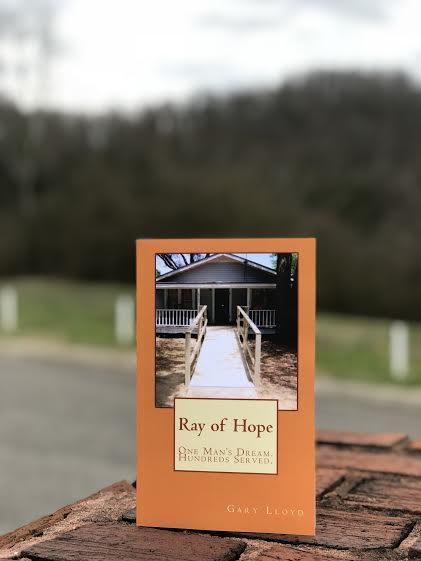
You put out a third book, and it’s back to the drawing board. You promote as much as you can on social media, begging for likes, retweets and positive Amazon reviews. Mostly, those come from your wife and mom. You spend hours looking up independent bookstores in every state, emailing them about your new book. You email a hundred stores and get four responses, all with words you weren’t hoping for. You do the same with various newspapers, hoping for any bit of publicity. You get three stories locally and one in Mississippi. You take your new book and the first two to many locations to snap photos of them for social media promotions. You take photos at a river, baseball field, church parking lot, abandoned business with a rusting door, Turner Field in Atlanta and even your driveway. You hope those images, along with excerpts from the books, draw attention. 

Finally, it’s time for another book signing. You’ve never attended one where there are a dozen authors, but it sounds like a good idea. There will be many people with various tastes, you believe. It is held at a general store just outside the main shopping district in town, where there is not much around. You load your own table and chairs, and a box of books. Because it is held in December, your wife bakes Christmas cookies for the event. Authors are scattered all over the store, between old Texaco signs, a crock pot, carved crosses and other antiques. 

One author has written about her experiences with cancer. Another has written a children’s book. A woman has written about adoption. One man, with more than five books to his name, plays a guitar at his table. Another man, who calls you “Brother,” passes out a poem he wrote that he printed on computer paper. Not many people come to this store during the four hours you are scheduled to stay. Four hours feels like eight. You sell one book, to a man who is about to undergo surgery and needs all the reading material he can get during his rest and rehab period. 

Six months later, you sign up for another large event, this one at a state park along a huge lake. It’s summer, and you assume that it will be well attended, with people swimming and fishing nearby. There is room for fifty authors. Fifteen or so show up. The authors are set up right on the lake, and you’re visited more by hungry mallards than locals seeking the latest in Christian fiction. You feed chili-cheese-flavored Fritos to the ducks and kick yourself for not bringing your rod and reel.

You sell two books: one to your mom for one of her friends, another to the wife of a co-worker. You mostly spend the day talking with fellow authors, about their inspirations and writing processes. You learn about how a man stumbled upon hundreds of documents that told the story of his father in World War II. You learn about adoption. You learn what it takes to write more than three hundred pages. More than anything, you learn about people. You get to know these people better. They become friends and supporters. 

You sell only the two books that day, but you soon realize that might be more than the others sitting near you sold. Some have traveled far for this event, and you feel for them. You help one author take his books back to his car. But they are happy, not deterred by going home with the same amount of books they brought. It is their passion, this writing thing. You learn, after three years grinding in this industry, that money isn’t everything. The industry, like most everything else, is about relationships. Your wife has been to all your events, baking cookies for them, taking in the little bit of money you make, smiling through dozens of games of Hangman. Your mother-in-law has driven to each book signing since she’s lived in Alabama, and even made you a book-themed tablecloth that is asked about and complimented by fellow authors at every event. Your parents and brother have come, and they have bought copies at signings even though they know you’d give them books for free. 

I didn’t get into this industry to make thousands of dollars, though a few hundred would be nice. I did it to tell stories that are worthy of sitting on your bookshelf or coffee table, to put something in print that provides some light in an increasingly dark world. Who knows, maybe some day long after I’m gone someone will read one of my books and say, “I needed that.” I’m going to keep writing as long as I’m able, with that in mind. These authors I sit with in an old general store or in the blazing heat to sell maybe one book inspire me. They fuel my passion. I hope I fuel theirs.

And that’s worth more than any royalty check.