The following story is a chapter in my book, Valley Road: Uplifting Stories from Down South. Get it here. By Gary Lloyd The name of the town is Moody, but … Continue reading Moody
The following story is a chapter in my book, Valley Road: Uplifting Stories from Down South. Get it here. By Gary Lloyd The name of the town is Moody, but … Continue reading Moody
Local blood donors saved as many as 225 lives by giving blood during Baldwin EMC’s Spring Into Action drive March 15 in Orange Beach and April 26 in Bay Minette.
The staff from LifeSouth Community Blood Center collected a total of 75 pints of blood, each of which can benefit as many as three people.
The co-op elected to divide the drive between two dates and their two district offices this year in an effort to reach members from the southern and northern parts of their service territory.
“We traditionally host Spring Into Action at our headquarters in Summerdale, which is our most centrally located office,” says Mark Ingram, Baldwin EMC’s vice president of corporate services and public relations. “However, Summerdale is still a bit of a drive from Bay Minette or the beach. Hosting it at our district offices gave our members and residents in those areas an opportunity to donate without distance being a factor.”
In addition to blood donations, non-perishable food was also collected for local distribution.
Ingram says the Spring Into Action drive is a part of Baldwin EMC’s vision to be community involved.
“As a member-owned cooperative, we’re called to do much more for our community than just provide electricity. Our goal is to improve the quality of life for those we serve, and events like this are one of the ways we can do that.”
MONTGOMERY – Alabama Gov. Kay Ivey signed four bills Monday supporting veterans and the military. The governor signed House Bills 58, 83, 88 and 92. Earlier this month at Maxwell Air Force Base, the governor also signed into law House Bill 388, the Military Family Jobs Opportunity Act.
“Throughout my career, I have advocated for our service men and women, and I will continue to do all I can as governor to offer my support to those who have given us so much,” Ivey said. “Alabamians are steadfast in their support for the military, and I am proud to strengthen Alabama’s bond with the military through these five bills I have signed into law.”
HB 58, known as the “Parks for Patriots Bill,” grants free admission to active or retired service members, who are Alabama residents, to state parks operated by the Department of Conservation and Natural Resources. An appropriate active or retired military identification card, a driver’s license with a military veteran designation, a valid Department of Defense Form or any other documentation prescribed by law or administrative rule must be shown to obtain free admission. In November 2017, Ivey announced that entry into Alabama’s State Parks was free for all veterans. At that time, Rep. Dickie Drake said he planned to file a bill in the 2018 Regular Session that would permanently codify Ivey’s Parks for Patriots plan into law.
“I am so proud to have sponsored a bill that allows veterans and current military to have free admission to Alabama State Parks,” Drake said. “With Memorial Day close at hand, this should be something nice for our Veterans and our military who have given so much and make so many sacrifices; we can never fully repay them.”
Ivey also signed HB 83, the Veterans Employment Act, and HB 88, which gives preference in competitive bids on state government contracts to businesses owned by veterans. Drake also sponsored HB 88. The Veterans Employment Act, sponsored by Rep. Connie Rowe, gives a tax credit to small businesses that hire unemployed veterans.
“This was an opportunity to help both our veterans and small businesses at the same time. Incentivizing the hiring and retention of our military veterans by Alabama small businesses allows us to acknowledge their service and provide them with more job opportunities,” Rowe said. “Small businesses will benefit, not only by qualifying for the tax incentive, but also by bringing employees into their businesses with the admirable traits and skills acquired during military training and service. It’s a win-win piece of legislation.”
HB 92, sponsored by Rep. Barry Moore, allows a person who meets the military service and award requirements to be issued a windshield placard displaying an appropriate military honor or veteran status. The placard will permit parking in designated military parking places. The bill makes it unlawful for a person to park in these designated military places without distinctive placard.
“In our great nation, we recognize that freedom is a right given by God, but we also know that right is protected by those who fight for it,” Ivey said. “I am grateful for the hard work and support of the Alabama Legislature for passing strong legislation supporting our service men and women.”
Earlier this month at Maxwell Air Force Base, Ivey signed into law HB 388, the Military Family Jobs Opportunity Act. Through this bill, professional licensing boards are required to issue licenses and certificates to military spouses who hold licenses and certificates from other states. In the case a state has lesser requirements, the state will issue temporary licenses. Sen. Gerald Dial and Rep. Thad McClammy were the sponsors of this legislation.
BIRMINGHAM – The U.S. Attorney’s Office today launched the Birmingham Safe Neighborhoods Task Force to offer prevention and community outreach programs within the city.
This task force will complement the law enforcement work of the Birmingham Public Safety Task Force, which was announced last month, in combined efforts to reduce violent crime in the Birmingham area, announced U.S. Attorney Jay E. Town.
The Birmingham Safe Neighborhoods Task Force will engage law enforcement, government agencies, nonprofit organizations, and corporate citizens in a coordinated and collaborative process to ensure parity in prevention, enforcement, and re-entry efforts. Building and restoring relationships between communities and law enforcement is a primary function of the task force.
“This task force will endeavor to meaningfully engage citizens of Birmingham with regard to how we can improve the station of the entire city,” Town said. “It is no longer enough just to prosecute our worst offenders. Prevention and outreach programs that decrease criminal activity and increase opportunity must accompany our overall crime reduction initiative,” he said. “I appreciate the leadership of our mayor, our sheriff, and all of our task force members for their willingness to engage in this worthy challenge.”
Members of the Birmingham Safe Neighborhoods Task Force will collaborate to develop and conduct community programs aimed at education, community-police relations and building opportunities that will benefit the entire community.
“As stated before, we are here for as long as it takes,” said Jefferson County Sheriff Mike Hale. “I have no doubt this multifaceted initiative is going to have a very positive impact on crime in general, but most especially violent crime. Taking violent criminals out of these neighborhoods and locking them up for 15 or more years will return these neighborhoods back to the good folks and improve their quality of life dramatically. That is the goal. It will be met.”
Building and improving trust and communication between the community and members of law enforcement will be a critical function of the BSNTF, Town said. That will include encouraging patrol officers, deputies and agents to increase general and positive interactions in the community, whether that be helping to spruce up a community park or passing out free ice-cream coupons to neighborhood kids.
The two Birmingham task forces incorporate principles of Project Safe Neighborhoods, the Department of Justice’s violent crime reduction strategy, and the National Public Safety Partnership. PSN is a nationwide Justice Department program committed to reducing gun and gang crime by networking existing local programs that target gun crime and supporting those efforts with training and funding.
U.S. Attorney General Jeff Sessions announced PSP last year as a training and technical assistance program designed to enhance the capacity of local jurisdictions to address violent crime in their communities. He selected Birmingham as one of the initial 12 locations to participate in the program. The PSP and PSN programs both reinforce the federal, state and local task force model as one of the most effective ways to reduce violent crime.
The baseball coach felt as if the pastor was talking directly to him. Sure, there was a congregation full of people, but the message was so pointed, so personal, that it felt like a one-on-one conversation.
The sermon was about stepping outside of your comfort zone. The coach had always talked to his high school players about doing the right thing, about what he wanted them to do. He did the same when he was the coach at his previous job. He had never really shown them.
“Baseball is just kind of an avenue for us,” he says.
When the church service was over and he went outside, he told his wife that he wanted to start a Bible study in their home with any player who wanted to come. He then called a friend, who had been a youth pastor at one time. He was all in to help. The next morning, the coach was preparing to tell his players of his new idea when one knocked on his door. He asked his coach if he would be all right with the players starting a Bible study in the locker room. He told the player that he would not believe what happened the day before.
“It was like God’s way of saying, ‘This is what you should do,’” he says.
The Bible study started the following Sunday. It was not mandatory, and players were told that it would not affect their playing time. It was totally separate from baseball. The coach figured on maybe a handful of players showing up. Fifteen of the eighteen on the roster came. Those numbers remained steady. Every Sunday during the baseball season, the players met at their head coach’s home for food, Bible study and fellowship. Sometimes, the studies lasted fifteen minutes. Sometimes, they lasted an hour. Afterward, they would watch the Sunday Night Baseball game on ESPN or play Wii. Players learned a lot about each other. They opened up about family, girlfriends, choices, college. They grew closer.
“It was an unbelievable time of team bonding away from baseball,” he says.
The coach’s favorite memory from those Bible studies is about a player who was selected in the Major League Baseball draft. He decided to instead play football and baseball at an Alabama university. That player came back to his old stomping grounds one Friday night for a football game. The coach stood with him on the sidelines. He asked if he missed the Friday night lights, playing sports at the high school level. The player said that he really didn’t. The coach was floored. How could an athlete not miss high school sports, his glory days? The one thing the player said he missed were those Bible studies.
“It just humbled me,” the coach says.
The coach has continued the Bible studies since becoming the head baseball coach at his third high school. After one of the studies, one of the boys called the coach thirty minutes after everyone left his home. He wanted to come back. They sat on his back porch for two hours, just talking. Without the Bible study, that relationship may have never deepened.
“I think it’s more than a Bible study,” he says. “It brings kids closer together. To me, that’s the special part. And that’s the important stuff. We are giving them an avenue to talk to us.”
The Bible studies happen during the baseball season, though on some occasions they have begun in December because the kids wanted to start them earlier. The coach says the importance varies from kid to kid, from team to team. Each one has a different personality.
“I just think we’ve seen some kids grow closer together,” he says.
The coach led his current team to its first baseball state championship in school history not long ago. He will not go so far as to say the Bible study was why the team won it all, but it was clearly a factor. That team, he says, just had something different about it. They were close. During the playoff run, at Bible studies on Sundays, baseball was not even a topic of conversation.
“We love it,” he says.
At a football game about five months after winning that state championship, the baseball team returned for the ring ceremony. There were four seniors on that team, and they had all started college at three different institutions. This was their first time being back together since graduating. The coach watched as they sat at their own table in the stadium’s press box, just sharing their experiences as college freshmen. It took the coach and his wife back to when they originally started the Bible study.
The coach gestured toward the group and said to his wife, “Look how special that is.”
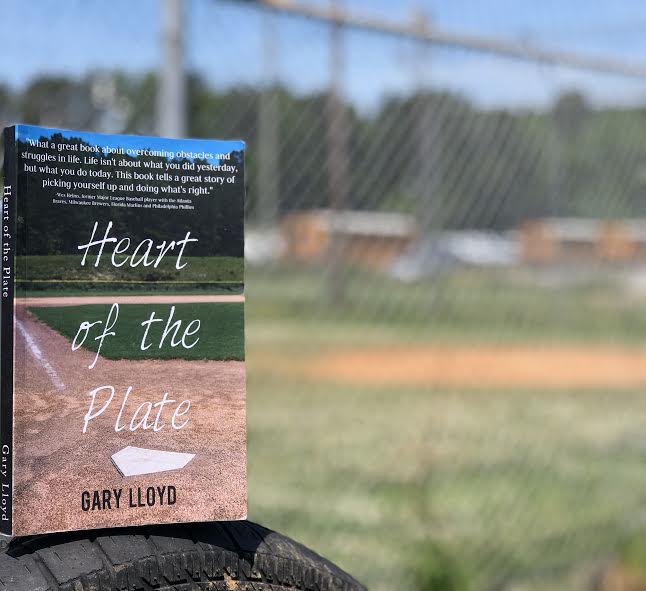
My third book, Heart of the Plate, is one that I wrote rather quickly.
Some may think that it is not of a certain quality, since I wrote it in about four months and had it published five months after the release of Deep Green. That’s for others who read it to judge and not me.
But I will say this: It is a fictional story I had in my mind for a long time, a story of redemption that I wanted to tell. I wrote pages and pages each day because I believed in the story and its message. It’s more than just baseball. It has addiction and overcoming, love lost and love rekindled, heartbreak and uplifting moments. It has something for everyone, and I hope you order a copy and let me know what you think.
Jeff Wright is at the pinnacle of his Major League Baseball career, earning his way into his first All-Star Game. Not long after, Jeff suffers a gruesome, career-ending injury and ventures down a path of self-destruction, and becomes addicted to painkillers. He is arrested for drug possession. Upon completing a stint in a rehabilitation center, Jeff returns to his hometown of Lewis Rock, Georgia, where he discovers that the town’s largest job source, Reynolds Manufacturing, is being sold off and will leave hundreds jobless. He also attempts to rekindle a love that he lost years ago. What begins as mandatory community service for Jeff’s arrest quickly becomes his saving grace. Follow along as Jeff helps his hometown through a difficult time the only way he knows how — through baseball.
The book earned praise from former Major League Baseball players Wes Helms, Matt Guerrier, and Jason Standridge, as well as former college softball head coach Karen Johns.
Read an interview about Heart of the Plate
The sophomore pitcher circled the mound before the first batter stepped into the box, and then he bent over behind the rubber. He extended his left hand and began to use his index finger as a pencil for the cool dirt. It was winter, and the high school baseball season was just underway. He was set to face his high school’s arch rival, one of the best teams in the state of Alabama. The sophomore had already won his first three starts as a varsity pitcher, including a five-inning no-hitter, striking out nine batters in a shortened game due to the mercy rule. He was an ace. But against his team’s rival, he should have been nervous. He was a sixteen-year-old pitching against a great team, after all. But he was as cool as he could be. He was pitching with purpose.
GET VALLEY ROAD: UPLIFTING STORIES FROM DOWN SOUTH HERE
Not long before the game, he stood in his coach’s office in the stadium’s press box, and talked about his purpose with a reporter. His mother died the previous October after battling breast cancer for nearly two years. The family found out about her diagnosis on Valentine’s Day when the sophomore was an eighth-grader, in the drive-thru at a Wendy’s. When she died, his mother was fifty years old. Just before she died, her son promised her two things — that he would marry a woman who reflected her and that he would pitch his way to college baseball.
“When people lose family members, some rarely get the opportunity to talk with them and say goodbye,” he says. “Barring the situation, I feel really thankful I was able to do that. When my mom was on hospice care, I got to be around her a lot. While she wasn’t very responsive, you could tell when she was hearing and listening to you. I got the chance to tell my mom how thankful I was to have her as my mom, and she taught me more (about) life than she would ever know. Getting to tell the person who gave you everything in life how thankful you are for it and how much you love them for the sacrifices they gave to benefit your life is something that will give you peace to any situation. I also promised her things in life that I would accomplish for her – in memory of her.”
He left the press box after a fifteen-minute interview and warmed up for the game. Just prior to the first pitch, he bent down to etch his mother’s initials and the breast cancer symbol on the backside of the pitcher’s mound. He proceeded to hurl a complete-game five-hitter, allowing his only two earned runs in the top of the seventh, the final inning. His team won 3-2. He struck out six batters. He finished his first varsity season with nine wins and one loss for a team that won the area championship.
“The support I had from my baseball team that season was something that was beyond special,” he says. “I felt so close to all those guys and I knew they were behind me supporting me through that time.”
His head coach that season was supportive. After the win over the team’s biggest rival, the coach talked about how his pitcher’s tough situation ministered to his team, how instead of the team ministering to him, his family ministered to the team. He called it amazing.
Over his final two seasons of high school baseball, the pitcher compiled twelve wins against just four losses and a 1.88 earned-run average. He struck out more than one hundred batters.
For his efforts, he earned scholarship offers from several college programs around the Southeast. He chose the one closest to home, to be near his longtime girlfriend and son, who was born when he was a high school junior. His plan was to propose to his girlfriend during one of his college baseball seasons. He did so on the first weekend of the 2017 college baseball season. She said yes.
“I feel like it is a promise kept, and I am blessed to be in the situation I am in,” he says. “I will always look back to my coaches and teammates during the hardest time in my life and see the positive impact they had on my life, and where I am now is because of all they did for me during this time in my life.”
As far as his mound ritual, the pitcher no longer etches his mother’s initials in the mound, but they are written across his glove, so that she will always be there for him every time he steps on a mound. He looks back to that sophomore season as a blessed time.
“Going through things like that will always be hard, but when you have people surrounding you and providing love and encouragement, it gives you a peace about it,” he says.
BIRMINGHAM — The Birmingham Bulls of the Southern Professional Hockey League is teaming up with Make-A-Wish Alabama on Saturday, March 17 to raise money for the local nonprofit organization.
Make-A-Wish Alabama grants life-changing wishes for children with critical illnesses in all 67 Alabama counties. There are currently about 300 children in the state waiting on a wish.
Bulls players will be wearing St. Patrick’s Day jerseys for this game, which will be auctioned off after the game to benefit Make-A-Wish Alabama.
The game is set for 7 p.m. March 17 at the Pelham Civic Center against the Virginian Roanoke Rail Yard Dawgs.
For more information, check out http://www.bullshockey.net.
Make sure to support this worthy cause!

I can count the number of concerts I have attended on one hand.
In high school, I saw P.O.D. in downtown Birmingham with a few friends.
There was the time last year when Colt Ford, Justin Moore and Brantley Gilbert came to Birmingham one warm night. There was the time Morgan Wallen, Nelly, Chris Lane and Florida Georgia Line shared the stage on a cold night at the Oak Mountain Amphitheatre.
But this week, I tried something different. My wife and I went to Iron City in downtown Birmingham, a venue that fills up an hour before the opening act takes the stage. We went to see Walker McGuire and Kane Brown.
We stood in a line that wrapped around two buildings, among teenage girls with Kane Brown photos used as their iPhone wallpapers, with twenty-somethings who could have used perhaps six more inches of material on their dresses.
Inside, we smelled enough cheap cologne to singe nose hairs and tried to find a quiet spot on the mezzanine. It was crowded, loud, hot, and I felt as if these types of events had passed me by. I’d be lying if I said I was looking forward to standing for three straight hours amongst the screamers and the beer-drinkers.
But something great, in addition to the music, happened.
Up on the mezzanine were a dozen or so reserved tables. We stood directly behind one, and I mentioned to my wife, “Must be VIP.”
The table’s occupants showed up close to showtime, both women. One was bald, with gold crosses dangling from her ears. She was there to see Kane Brown, and she was excited. She even brought a small sign that referenced one of the country artist’s songs. It read, “This Is My ‘Last Minute Late Night’ Before My Surgery.” Surgery was underlined. She taped that small sign to the mezzanine railing, hoping the budding country star would see it.
As the night went on, she asked my wife to take photos of her and her friend. My wife, of course, did.
I found out the woman, named Merin, has Stage 2 Triple Negative Breast Cancer, diagnosed June 5 of this year. She had port surgery just over a week later and has since had four rounds of Red Devil chemotherapy, and twelve treatments of Taxol and Carboplatin. One treatment a week for twelve weeks.
Someone at the concert asked when Merin, from Pell City, was having surgery. The surgery is this Dec. 12, a double mastectomy and reconstruction. She will have to spend four or five days in the hospital, and will also have four drains and expanders for a few months.
“It was very important to me to be able to have a fun night out,” the woman told me. “I’ve only had a six-week gap in between my chemo treatments and surgery day.”
She told me that she was in Atlanta for the Luke Combs concert the previous night. She was having her own “last minute late nights” before life changes for a long while.
“After surgery I really won’t be able to attend any more concerts for a while just because of risk of getting sick or bumped into,” she said. “I don’t know how after surgery I will be feeling. The doctors told me around a year or so. My next concert I’m going to shoot for is Florida Georgia Line, Luke Combs or Carrie Underwood.
“I have fought a long fight,” she said. “You always think, ‘Oh my, I feel bad for someone who has cancer.’ But until you live it you really have no idea how bad it is.”
It is tough financially and emotionally. The woman has a seven-year-old son she calls “wonderful,” and he needs his mother. He has had to help her more than any kid should have to. It’s not fair to him, she told me.
“I will be glad when this is all over with so he can be a kid again, and I can take back my role as mom,” she told me. “I trust in the Lord to guide my family and I in the right direction. With Him, anything is possible.”
The concert was awesome, and I know this woman enjoyed it. I could see it on her face, hear it in her screams as Kane Brown performed “Last Minute Late Night” and “Learning” on stage.
Kane Brown never saw her sign, as far as I know. The room was too dark at times, and too bright with purple lights at others. I wish he would have seen it, and gotten to meet this special woman.
I checked Kane Brown’s social media channels two days after the concert, just to see if he posted anything from his trip to the Magic City.
His two Tweets since the show: “My job’s to bring light into other people’s lives” and “You’re special.”
If he didn’t see that woman’s sign, you could have fooled me with those Tweets.
When you tear the tape on the heavy cardboard box delivered by UPS, dreams tend to pour out.
You run your fingers across the matte covers of a hundred books, and you almost can’t believe it’s your name printed on them, your words in black ink inside. It’s surreal.
You have grand visions for your future. You see a line of people out the door at Books-A-Million and Barnes and Noble, clutching your book for you to sign. You see news articles about your book in publications across the country, praising its prose and description, and maybe it’s even on the bestsellers list. You see royalty checks rolling in that pay for vacations to the beach.
Those are all extreme examples, but you dream of them, at least a little bit. Why do something if you don’t want it to be the best? But the harsh truth is very few authors reach the mountaintop of writing books, where all you do is write bestsellers that are turned into blockbuster movies. For most of us, it goes a little something like this.
Your first book signing ever is held at a posh store near Birmingham, Alabama, where your name and photo appear on a large poster outside. You feel like royalty. You sign a couple dozen pre-ordered books in a back room. You expect to do the same in the two-hour event that follows, but mostly you chat with the store owner about his business model, and with your parents about what’s for dinner later. You sell two books to the same man.
Your next signing is at a bookstore not far away from the first one, and maybe ten customers come in the two hours you are there. About four acknowledge your existence, as if you are the DirecTV rep begging for people’s time in Wal-Mart. You play Hangman on notebook paper with your wife to pass the time, which helps. You sell no books, but you beat your wife in at least one game of Hangman.
Your next signing is the one you are looking forward to the most. You just know that the third time is the charm. It is in your hometown, which is also the focus of your book. The event is in a high-traffic area, near an Old Navy and a Target. It’s on a Saturday. This will be great. The publishing company has sent posters previewing your signing to be taped to the windows, so folks will know when to come by. You arrive, and the employees have no clue who you are, or about any book signing event, for that matter. You have been forgotten, and you sell one book. You try to ease your anger about the store’s forgetfulness with more games of Hangman. This time, it doesn’t help much.
Your next signing event is a true act of desperation, held at a large grocery store in a city full of people who have never heard of you or your book. You wonder why this was even scheduled. You sit near the small section of books the store carries, and awkwardly watch as people push shopping carts full of Gatorade, chicken breasts and vanilla ice cream. One man is intrigued by your work, and he asks you a dozen questions as he flips through your book. He does not buy it.
This is rock bottom. You wonder if those eight months of research pressed into more than one hundred pages was worth it. You didn’t write the book for the money, but sitting for two hours without selling one is embarrassing and seemingly a waste of time. Then, something great happens.
You publish your second book, and a church invites you to talk about it and sign copies. You are nervous, because talking in front of a crowd does not exactly seem easy. But you do it anyway, because it is marketing for your book. It goes surprisingly well. You talk for half an hour about your inspirations and the book’s plot, and answer a dozen questions. You connect with this group, and their laughs don’t sound like pity. Almost every little old lady that Wednesday night buys a book. You make five hundred bucks and give some back to the church. You are energized to do more.
You put out a third book, and it’s back to the drawing board. You promote as much as you can on social media, begging for likes, retweets and positive Amazon reviews. Mostly, those come from your wife and mom. You spend hours looking up independent bookstores in every state, emailing them about your new book. You email a hundred stores and get four responses, all with words you weren’t hoping for. You do the same with various newspapers, hoping for any bit of publicity. You get three stories locally and one in Mississippi. You take your new book and the first two to many locations to snap photos of them for social media promotions. You take photos at a river, baseball field, church parking lot, abandoned business with a rusting door, Turner Field in Atlanta and even your driveway. You hope those images, along with excerpts from the books, draw attention.
Finally, it’s time for another book signing. You’ve never attended one where there are a dozen authors, but it sounds like a good idea. There will be many people with various tastes, you believe. It is held at a general store just outside the main shopping district in town, where there is not much around. You load your own table and chairs, and a box of books. Because it is held in December, your wife bakes Christmas cookies for the event. Authors are scattered all over the store, between old Texaco signs, a crock pot, carved crosses and other antiques.
One author has written about her experiences with cancer. Another has written a children’s book. A woman has written about adoption. One man, with more than five books to his name, plays a guitar at his table. Another man, who calls you “Brother,” passes out a poem he wrote that he printed on computer paper. Not many people come to this store during the four hours you are scheduled to stay. Four hours feels like eight. You sell one book, to a man who is about to undergo surgery and needs all the reading material he can get during his rest and rehab period.
Six months later, you sign up for another large event, this one at a state park along a huge lake. It’s summer, and you assume that it will be well attended, with people swimming and fishing nearby. There is room for fifty authors. Fifteen or so show up. The authors are set up right on the lake, and you’re visited more by hungry mallards than locals seeking the latest in Christian fiction. You feed chili-cheese-flavored Fritos to the ducks and kick yourself for not bringing your rod and reel.
You sell two books: one to your mom for one of her friends, another to the wife of a co-worker. You mostly spend the day talking with fellow authors, about their inspirations and writing processes. You learn about how a man stumbled upon hundreds of documents that told the story of his father in World War II. You learn about adoption. You learn what it takes to write more than three hundred pages. More than anything, you learn about people. You get to know these people better. They become friends and supporters.
You sell only the two books that day, but you soon realize that might be more than the others sitting near you sold. Some have traveled far for this event, and you feel for them. You help one author take his books back to his car. But they are happy, not deterred by going home with the same amount of books they brought. It is their passion, this writing thing. You learn, after three years grinding in this industry, that money isn’t everything. The industry, like most everything else, is about relationships. Your wife has been to all your events, baking cookies for them, taking in the little bit of money you make, smiling through dozens of games of Hangman. Your mother-in-law has driven to each book signing since she’s lived in Alabama, and even made you a book-themed tablecloth that is asked about and complimented by fellow authors at every event. Your parents and brother have come, and they have bought copies at signings even though they know you’d give them books for free.
I didn’t get into this industry to make thousands of dollars, though a few hundred would be nice. I did it to tell stories that are worthy of sitting on your bookshelf or coffee table, to put something in print that provides some light in an increasingly dark world. Who knows, maybe some day long after I’m gone someone will read one of my books and say, “I needed that.” I’m going to keep writing as long as I’m able, with that in mind. These authors I sit with in an old general store or in the blazing heat to sell maybe one book inspire me. They fuel my passion. I hope I fuel theirs.
And that’s worth more than any royalty check.
 Gary Lloyd Books